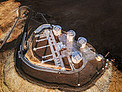
Con l'aiuto del VLT (Very Large Telescope) dell'ESO (l'European Southern Observatory o Osservatorio Europeo Australe), alcuni astronomi hanno scoperto e studiato in dettaglio la sorgente di emissioni radio più distante finora conosciuta. La sorgente è un quasar "radio-brillante" - un oggetto luminoso con potenti getti che emettono a lunghezze d'onda radio - così lontano che la sua luce ha impiegato 13 miliardi di anni per raggiungerci. La scoperta potrebbe fornire importanti indizi per aiutare gli astronomi a comprendere l'Universo primordiale.
Testo immagini e video disponibil su:
https://www.eso.org/public/switzerland-it/news/eso2103/
Cordiali saluti,
The ESO Department of Communication
08 Marzo 2021

|
02 Marzo 2021: The latest edition of ESO's journal, The Messenger, is now available online. This is a special issue dedicated to the instrumentation programme for ESO’s Extremely Large Telescope (ELT ...
|
| Leggi ancora |
|
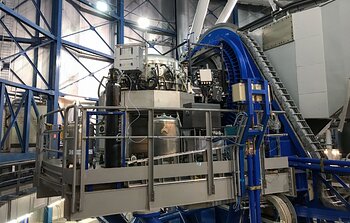
01 Febbraio 2021: Since its first light in 2006, the high-resolution infrared CRIRES spectrograph on ESO’s Very Large Telescope (VLT) has made a number of exciting scientific discoveries. The new and improved ...
|
| Leggi ancora |
|
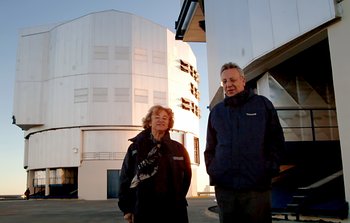
Interview with Catherine Cesarsky
08 Marzo 2021: In celebration of International Women’s Day, we spoke to Catherine Cesarsky, who was ESO Director General between 1999 and 2007. Since then, she has taken on a number of prestigious ...
|
| Leggi ancora |
|
Vera Matenaar, Giulia Perotti, Catarina Fernandes and Hannah Calcutt
26 Febbraio 2021: We are all familiar with the awe we experience when looking up at the stars. For many people, this sense of wonder leads to inspiration. Astronomers look up and are ...
|
| Leggi ancora |

|
11 Febbraio 2021: To mark the International Day of Women and Girls in Science, we spoke to astronomers and engineers at ESO to find out who their female role model in science or ...
|
| Leggi ancora |
|
Justin Tabbett
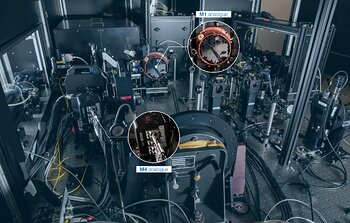
29 Gennaio 2021: In a laboratory at ESO headquarters, there is a setup of optics, lenses and mirrors aiding the development of the Extremely Large Telescope — the Miniscule ELT, otherwise known as ...
|
| Leggi ancora |
|
|
|
|