Mitteilung
Neues SOXS-Instrument bereit zur Beobachtung flüchtiger kosmischer Ereignisse
16. Dezember 2025

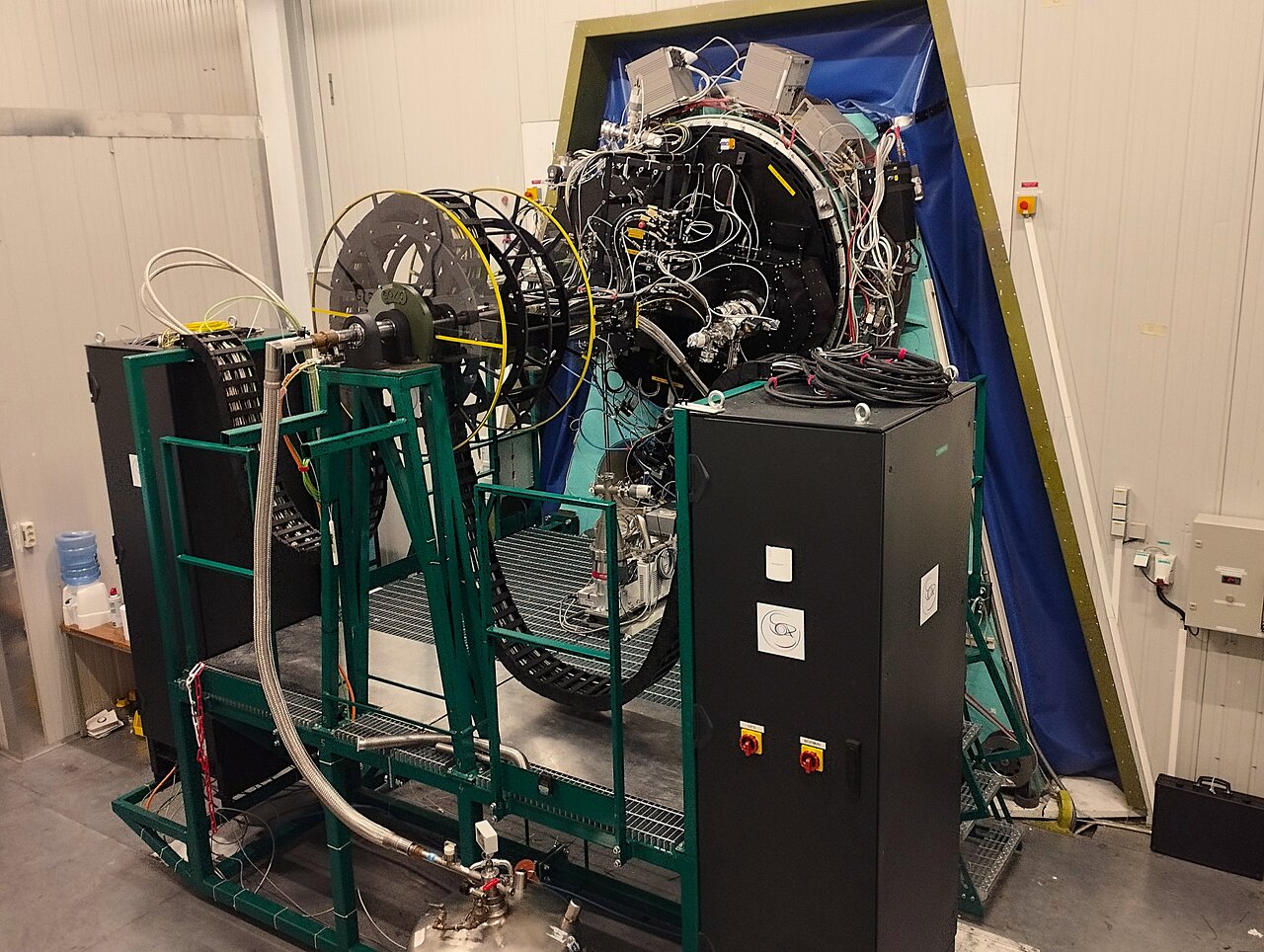
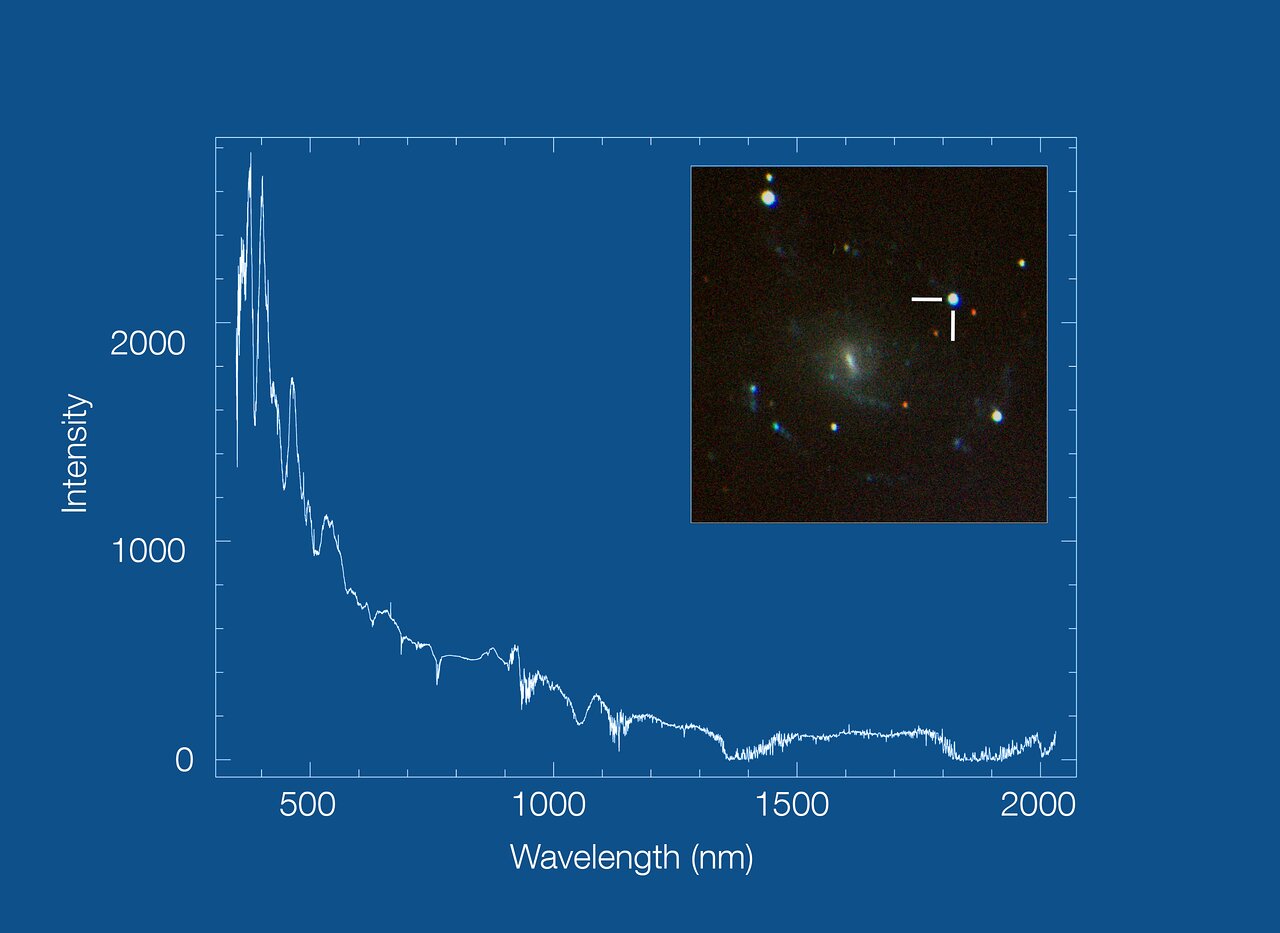
Das neue ESO-Instrument SOXS (Son Of X-Shooter) hat erfolgreich seine ersten Beobachtungen am La-Silla-Observatorium in Chile durchgeführt. Der Spektrograf kann flexibel und schnell für Beobachtungen zeitkritischer astronomischer Ereignisse wie Gammastrahlenausbrüche, Supernovae und Asteroiden, die nahe an der Erde vorbeifliegen, eingesetzt werden.
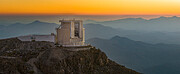
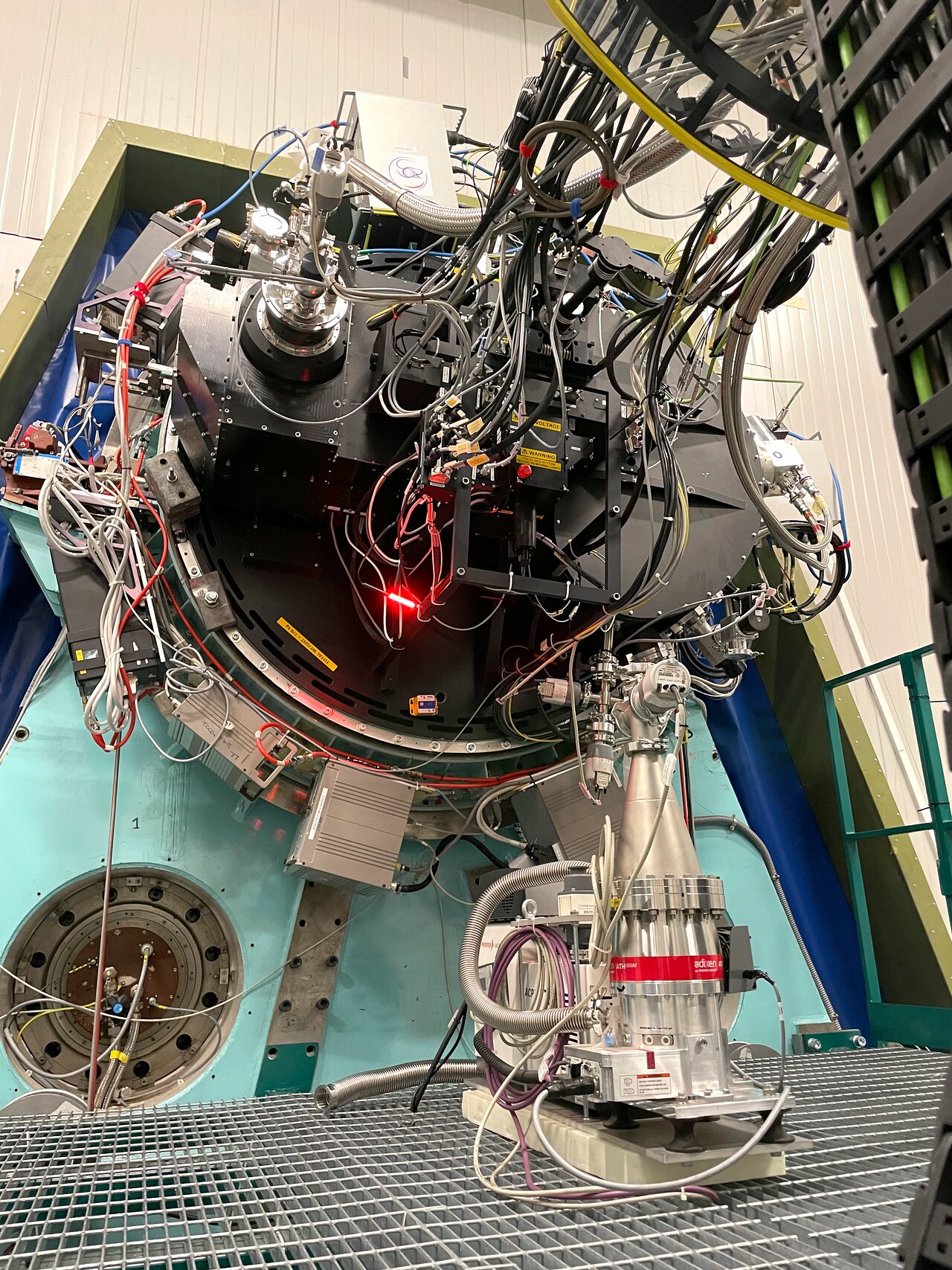
SOXS ist ein einzigartiger Spektrograf, mit dem sich von seinem neuen Standort am New Technology Telescope (NTT, siehe Abbildung oben) der ESO mit 3,58 Metern Durchmesser aus kurzlebige kosmische Ereignisse sowohl in großer Entfernung als auch näher an der Erde schnell beobachten lassen. SOXS wurde für die gleichzeitige Beobachtung im optischen und nahen Infrarotbereich entwickelt und ist an den X-shooter-Spektrografen angelehnt, der derzeit am Very Large Telescope der ESO im Einsatz ist.
„SOXS wurde vor 10 Jahren im Hinblick auf die sogenannte Time-Domain-Astronomie konzipiert“, sagt der leitende Forscher des Projekts, Sergio Campana vom Brera-Observatorium am italienischen Nationalinstitut für Astrophysik (INAF). „Nach Jahren harter Arbeit sind wir nun in der Lage, eine wichtige Rolle bei der Erforschung astrophysikalischer Transienten zu spielen.“
Transienten sind astronomische Phänomene, die innerhalb relativ kurzer Zeiträume auftreten oder sich in ihrer Helligkeit oder ihrem Aussehen verändern. Dazu gehören Supernova-Explosionen, Sterne, die von supermassereichen Schwarzen Löchern auseinandergerissen werden, Gammastrahlenausbrüche im sehr fernen Universum und sich schnell bewegende Asteroiden in unserem Sonnensystem, die alle von SOXS untersucht werden sollen. Wie X-shooter am VLT wird das Instrument eine Vielzahl von Anwendungsmöglichkeiten haben, aber SOXS wurde speziell für die Nachbeobachtung von transienten Ereignissen entwickelt, die bei Weitwinkelaufnahmen entdeckt wurden, oder für die Nachverfolgung von Echtzeit-Warnmeldungen, die nach bestimmten kosmischen Ereignissen an die astronomische Gemeinschaft gesendet werden.
Da vorübergehende Ereignisse nur einen flüchtigen Moment dauern, der nur wenige Millisekunden betragen kann, ist es von entscheidender Bedeutung, dass die Entdeckung dieser kosmischen Phänomene innerhalb von Minuten oder Stunden mit speziellen Instrumenten weiterverfolgt wird. Die Beschaffenheit dieser Objekte verändert sich zudem mit der Zeit, manchmal sogar dramatisch. Um diese Veränderungen zu untersuchen und zu verstehen, benötigen Astronom*innen eine ununterbrochene Nachverfolgung über einen längeren Zeitraum hinweg mit einem speziellen Instrument und Teleskop, was angesichts der Nachfrage nach Beobachtungszeit an professionellen Teleskopen nicht ohne Weiteres möglich ist. SOXS wird am NTT diese Lücke schließen und eine beispiellose kontinuierliche Beobachtung dieser schwer fassbaren, aber faszinierenden astronomischen Objekte ermöglichen.
„Die Spezialisierung eines mittelgroßen Teleskops wie dem NTT auf eine bestimmte Aufgabe wie die Verfolgung von Transienten ist der Schlüssel zum Erfolg“, erläutert SOXS-Projektleiter Pietro Schipani vom INAF-Observatorium Capodimonte. „Wir sind sehr stolz auf die Menschen, die seit vielen Jahren daran arbeiten, unseren Traum zu verwirklichen.“
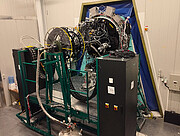
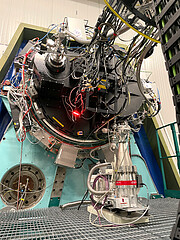
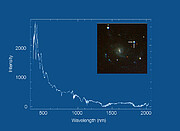
SOXS ersetzt die beiden bisherigen Spektrographen des NTT, SOFI (Son of ISAAC) und EFOSC2 (ESO Faint Object Spectrograph and Camera 2). „Im Grunde handelt es sich um zwei Instrumente in einem“, erklärt Paolo D’Avanzo, SOXS-Instrumentenwissenschaftler am INAF-Brera, „mit einem Doppelspektrografen, der den gesamten optischen und nahinfraroten Wellenlängenbereich in einer einzigen Aufnahme abdeckt und so die Effizienz des NTT erheblich steigert.“ Das Gerät funktioniert ähnlich wie ein Prisma, das Licht bricht, und ermöglicht es Astronom*innen, Eigenschaften der beobachteten Objekte und Ereignisse sichtbar zu machen, wie beispielsweise die chemische Zusammensetzung oder die Entfernung zur Quelle. Außerdem ermöglicht es Beobachtungen im Bildgebungsmodus im sichtbaren Licht. Das Instrument befindet sich derzeit unter der Aufsicht des ESO-Teams in der letzten Phase der Inbetriebnahme am Teleskop, bevor die wissenschaftlichen Beobachtungen sowohl des Konsortiums als auch der breiteren ESO-Gemeinschaft beginnen.
Weitere Informationen
Das SOXS-Konsortium besteht aus:
- Italien: INAF (Osservatorio astronomico di Brera, Osservatorio astronomico di Capodimonte, Osservatorio astronomico di Padova, Osservatorio astronomico di Catania, Osservatorio astronomico di Roma und Fundación Galileo Galilei) – Leitung des Konsortiums
- Israel: Weizmann-Institut und Universität Tel Aviv
- Großbritannien: Queen’s University Belfast und Universität Oxford
- Finnland: Universität Turku und Finnisches Zentrum für Astronomie mit ESO (FINCA)
- Chile: Millennium-Institut für Astrophysik
- Dänemark: Niels-Bohr-Institut und Universität Aarhus
Links
- Immer einsatzbereit: Wie das neue SOXS-Instrument flüchtige Ereignisse erfassen wird (ESO-Blogbeitrag, Englisch)
- Allgemeine Informationen zu SOXS
- Technische Informationen zu SOXS
- Bilder vom New Technology Telescope
- Für Wissenschaftler*innen: Bericht zum SOXS Day, einer Veranstaltung, bei der das SOXS-Instrument und seine wissenschaftlichen Möglichkeiten der Öffentlichkeit vorgestellt wurden (SOXS-Day-Website)
Kontaktinformationen
Bárbara Ferreira
ESO Media Manager
Garching bei München
E-Mail: press@eso.org
Über die Mitteilung
| ID: | ann25011 |
Bilder
Our use of Cookies
We use cookies that are essential for accessing our websites and using our services. We also use cookies to analyse, measure and improve our websites’ performance, to enable content sharing via social media and to display media content hosted on third-party platforms.
ESO Cookies Policy
The European Organisation for Astronomical Research in the Southern Hemisphere (ESO) is the pre-eminent intergovernmental science and technology organisation in astronomy. It carries out an ambitious programme focused on the design, construction and operation of powerful ground-based observing facilities for astronomy.
This Cookies Policy is intended to provide clarity by outlining the cookies used on the ESO public websites, their functions, the options you have for controlling them, and the ways you can contact us for additional details.
What are cookies?
Cookies are small pieces of data stored on your device by websites you visit. They serve various purposes, such as remembering login credentials and preferences and enhance your browsing experience.
Categories of cookies we use
Essential cookies (always active): These cookies are strictly necessary for the proper functioning of our website. Without these cookies, the website cannot operate correctly, and certain services, such as logging in or accessing secure areas, may not be available; because they are essential for the website’s operation, they cannot be disabled.
Functional Cookies: These cookies enhance your browsing experience by enabling additional features and personalization, such as remembering your preferences and settings. While not strictly necessary for the website to function, they improve usability and convenience; these cookies are only placed if you provide your consent.
Analytics cookies: These cookies collect information about how visitors interact with our website, such as which pages are visited most often and how users navigate the site. This data helps us improve website performance, optimize content, and enhance the user experience; these cookies are only placed if you provide your consent. We use the following analytics cookies.
Matomo Cookies:
This website uses Matomo (formerly Piwik), an open source software which enables the statistical analysis of website visits. Matomo uses cookies (text files) which are saved on your computer and which allow us to analyze how you use our website. The website user information generated by the cookies will only be saved on the servers of our IT Department. We use this information to analyze www.eso.org visits and to prepare reports on website activities. These data will not be disclosed to third parties.
On behalf of ESO, Matomo will use this information for the purpose of evaluating your use of the website, compiling reports on website activity and providing other services relating to website activity and internet usage.
Matomo cookies settings:
Additional Third-party cookies on ESO websites: some of our pages display content from external providers, e.g. YouTube.
Such third-party services are outside of ESO control and may, at any time, change their terms of service, use of cookies, etc.
YouTube: Some videos on the ESO website are embedded from ESO’s official YouTube channel. We have enabled YouTube’s privacy-enhanced mode, meaning that no cookies are set unless the user actively clicks on the video to play it. Additionally, in this mode, YouTube does not store any personally identifiable cookie data for embedded video playbacks. For more details, please refer to YouTube’s embedding videos information page.
Cookies can also be classified based on the following elements.
Regarding the domain, there are:
- First-party cookies, set by the website you are currently visiting. They are stored by the same domain that you are browsing and are used to enhance your experience on that site;
- Third-party cookies, set by a domain other than the one you are currently visiting.
As for their duration, cookies can be:
- Browser-session cookies, which are deleted when the user closes the browser;
- Stored cookies, which stay on the user's device for a predetermined period of time.
How to manage cookies
Cookie settings: You can modify your cookie choices for the ESO webpages at any time by clicking on the link Cookie settings at the bottom of any page.
In your browser: If you wish to delete cookies or instruct your browser to delete or block cookies by default, please visit the help pages of your browser:
Please be aware that if you delete or decline cookies, certain functionalities of our website may be not be available and your browsing experience may be affected.
You can set most browsers to prevent any cookies being placed on your device, but you may then have to manually adjust some preferences every time you visit a site/page. And some services and functionalities may not work properly at all (e.g. profile logging-in, shop check out).
Updates to the ESO Cookies Policy
The ESO Cookies Policy may be subject to future updates, which will be made available on this page.
Additional information
For any queries related to cookies, please contact: pdprATesoDOTorg.
As ESO public webpages are managed by our Department of Communication, your questions will be dealt with the support of the said Department.