Annuncio
SOXS, il nuovo strumento pronto a osservare eventi cosmici fuggevoli
16 Dicembre 2025

Il nuovo strumento dell'ESO, SOXS (Son Of X-Shooter), ha effettuato con successo le prime osservazioni all'Osservatorio di La Silla in Cile. Lo spettrografo può essere programmato in modo flessibile e rapido per effettuare osservazioni di eventi astronomici in cui il tempo è un fattore cruciale, come i lampi di raggi gamma, le supernove e gli asteroidi che transitano vicino alla Terra.
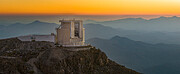
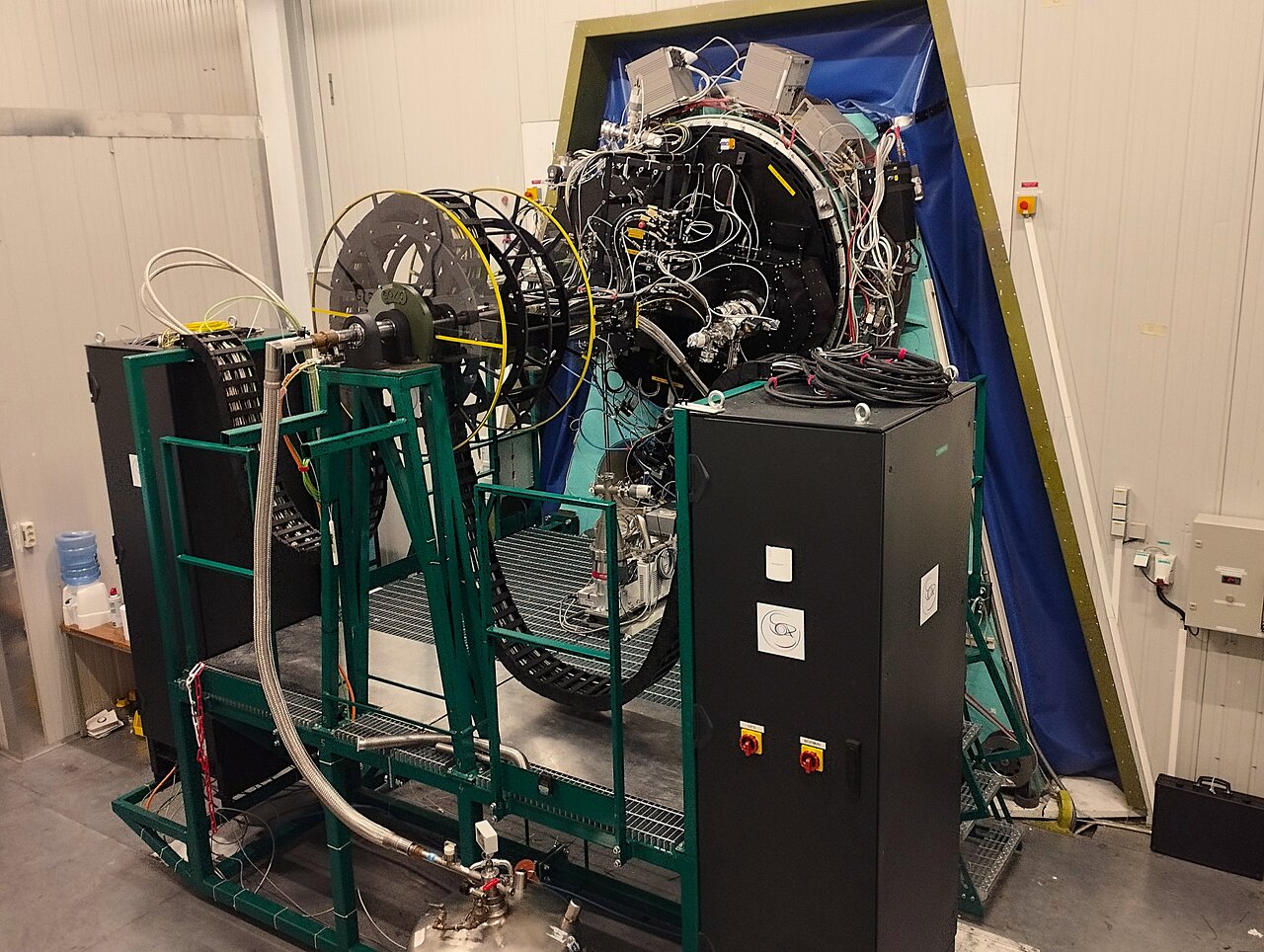
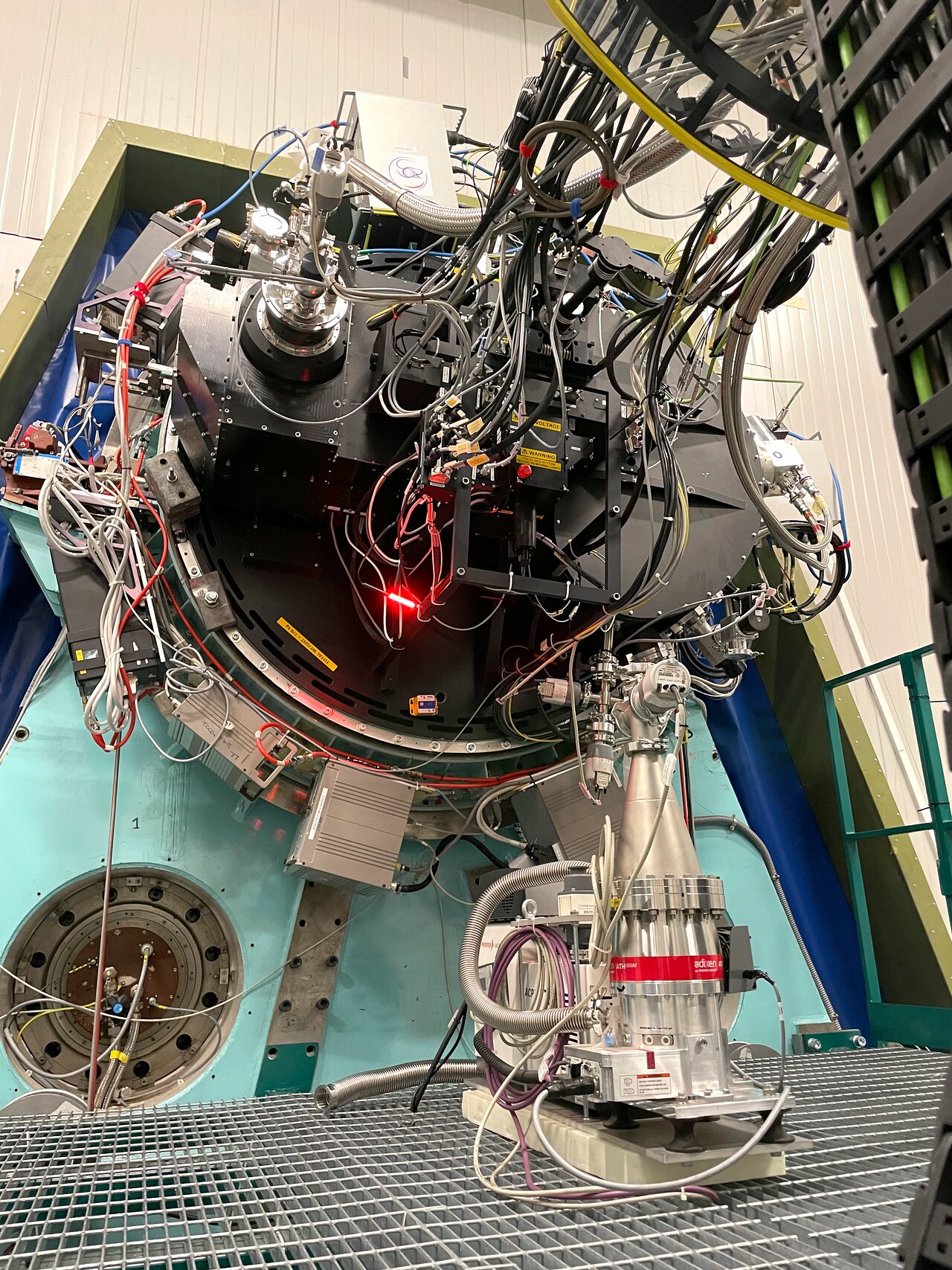
Dalla nuova sede sul New Technology Telescope (NTT) da 3,58 metri dell'ESO, nella foto sopra, SOXS è uno spettrografo unico nel suo genere che può essere utilizzato per osservare rapidamente eventi cosmici transienti, a grandi distanze o più vicini a noi. Progettato per osservare simultaneamente sia nell'ottico che nel vicino infrarosso, SOXS si ispira allo strumento X-shooter attualmente in funzione sul Very Large Telescope (VLT) dell'ESO.
"SOXS è stato concepito 10 anni fa nell'ottica di quella che oggi viene chiamata astronomia dei fenomeni transienti (time-domain in inglese)", afferma il Responsabile Principale (PI) del progetto, Sergio Campana, dell'Osservatorio Astronomico di Brera, dell'Istituto Nazionale di Astrofisica (INAF). "Dopo anni di duro lavoro, ora possiamo svolgere un ruolo fondamentale nello studio dei transienti astrofisici".
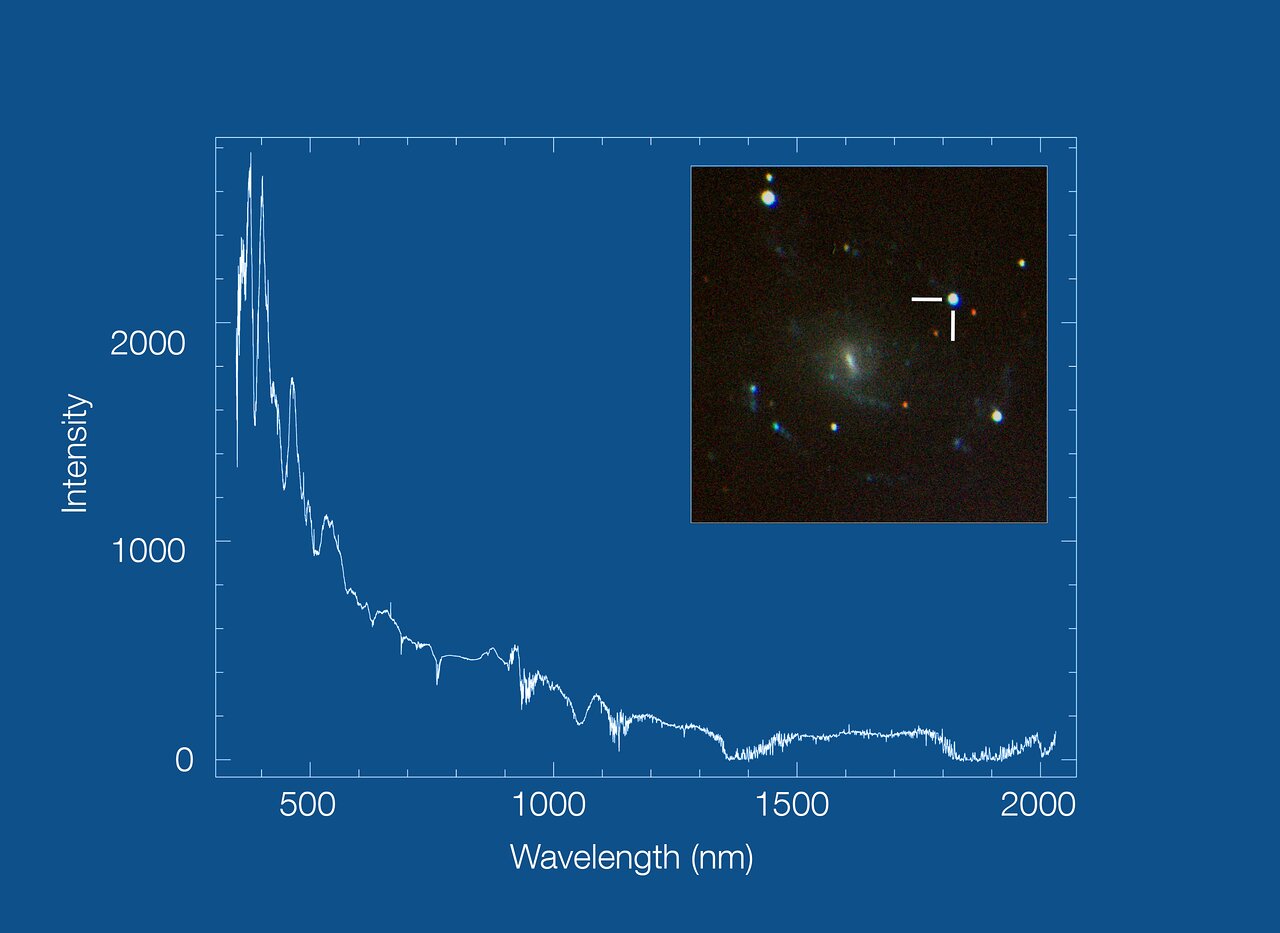
I transienti sono fenomeni astronomici che accadono, o cambiano di luminosità o aspetto, su scale temporali relativamente brevi. Tra questi rientrano le esplosioni di supernova, le stelle distrutte dalla gravita' dei buchi neri supermassicci, i lampi di raggi gamma nell'Universo distante e gli asteroidi in rapido movimento nel Sistema Solare: tutti fenomeni che SOXS studierà. Come X-shooter al VLT, lo strumento avrà un'ampia varietà di applicazioni, ma SOXS è stato specificamente progettato per condurre osservazioni in serie di eventi di breve durata scoperti nelle immagini a largo campo o in seguito ad allerte in tempo reale inviate alla comunità astronomica dopo specifici eventi cosmici.
Poiché gli eventi transienti durano solo un attimo fugace, che può essere breve fino a pochi millisecondi, è fondamentale che le scoperte di questi fenomeni cosmici siano seguite entro pochi minuti o poche ore da strumenti dedicati. Anche la natura di questi oggetti puo' cambiare nel tempo, a volte in modo radicale. Per studiare e comprendere questi cambiamenti, gli astronomi hanno bisogno di osservazioni ininterrotte nel tempo con uno strumento e un telescopio dedicati, una possibilità non comunemente disponibile, data la richiesta di tempo di osservazione sui telescopi professionali. SOXS sull'NTT colmerà questa lacuna e fornirà una copertura continua, senza precedenti, di questi oggetti astronomici sfuggenti, ma affascinanti.
"Specializzare un telescopio di medie dimensioni come l'NTT per un compito determinato come la ricerca di transienti è la chiave del successo", aggiunge Pietro Schipani, Responsabile di Progetto (PM) di SOXS dell'INAF - Osservatorio Astronomico di Capodimonte. "Siamo molto orgogliosi delle persone che hanno lavorato per molti anni per realizzare questo sogno".
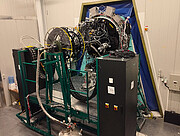
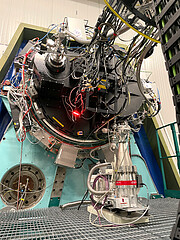
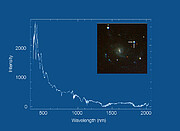
SOXS sostituisce simultaneamente i due precedenti spettrografi dell'NTT, SOFI (Son of Isaac) ed EFOSC2 (ESO Faint Object Spectrograph and Camera 2). "Di fatto, si tratta di due strumenti in uno", conclude Paolo D'Avanzo, Responsabile Scientifico dello strumento SOXS, dell'INAF - Osservatorio Astronomico di Brera, "con un doppio spettrografo progettato per coprire l'intero intervallo di lunghezze d'onda del visibile e del vicino infrarosso in un'unica acquisizione, aumentando significativamente l'efficienza dell'NTT". Questo dispositivo funziona in modo simile a un prisma che divide la luce, consentendo agli astronomi di svelare le caratteristiche degli eventi osservati, come la composizione chimica o la distanza della sorgente. Inoltre, consentirà anche di ottenere immagini nella banda del visibile. Lo strumento è attualmente nella fase finale di collaudo al telescopio sotto la supervisione del gruppo di lavoro dell'ESO, in vista dell'inizio delle osservazioni scientifiche del consorzio e della più ampia comunità dell'ESO.
Ulteriori informazioni
Il consorzio SOXS e' composto da:
- Italia: INAF (Osservatorio Astronomico di Brera, Osservatorio Astronomico di Capodimonte, Osservatorio Astronomico di Padova, Osservatorio Astrofisico di Catania, Osservatorio Astronomico di Roma e Fundación Galileo Galilei) — a capo del consorzio
- Israele: Weizmann Institute e Tel Aviv University
- Regno Unito: Queen’s University Belfast e University of Oxford
- Finlandia: University of Turku e Finnish Centre for Astronomy with ESO (FINCA)
- Cile: Millennium Institute of Astrophysics
- Danimarca: The Niels Bohr Institute e Aarhus University
Links
- Informazioni generali aggiuntive su SOXS
- Informazioni tecniche aggiuntive su SOXS
- Immagini legate al New Technology Telescope
- Per i ricercatori: "SOXS Day", incontro per presentare lo strumento SOXS e le opportunita' di ricerca ad esso legate alla comunita' scientifica (in inglese)
Contatti
Bárbara Ferreira
ESO Media Manager
Garching bei München, Germany
Email: press@eso.org
Anna Wolter (press contact Italia)
Rete di divulgazione scientifica dell'ESO e INAF-Osservatorio Astronomico di Brera
Milano, Italy
Tel.: +39 02 72320321
E-mail: eson-italy@eso.org
A proposito dell'annuncio
| Identificazione: | ann25011 |
Immagini
Our use of Cookies
We use cookies that are essential for accessing our websites and using our services. We also use cookies to analyse, measure and improve our websites’ performance, to enable content sharing via social media and to display media content hosted on third-party platforms.
ESO Cookies Policy
The European Organisation for Astronomical Research in the Southern Hemisphere (ESO) is the pre-eminent intergovernmental science and technology organisation in astronomy. It carries out an ambitious programme focused on the design, construction and operation of powerful ground-based observing facilities for astronomy.
This Cookies Policy is intended to provide clarity by outlining the cookies used on the ESO public websites, their functions, the options you have for controlling them, and the ways you can contact us for additional details.
What are cookies?
Cookies are small pieces of data stored on your device by websites you visit. They serve various purposes, such as remembering login credentials and preferences and enhance your browsing experience.
Categories of cookies we use
Essential cookies (always active): These cookies are strictly necessary for the proper functioning of our website. Without these cookies, the website cannot operate correctly, and certain services, such as logging in or accessing secure areas, may not be available; because they are essential for the website’s operation, they cannot be disabled.
Functional Cookies: These cookies enhance your browsing experience by enabling additional features and personalization, such as remembering your preferences and settings. While not strictly necessary for the website to function, they improve usability and convenience; these cookies are only placed if you provide your consent.
Analytics cookies: These cookies collect information about how visitors interact with our website, such as which pages are visited most often and how users navigate the site. This data helps us improve website performance, optimize content, and enhance the user experience; these cookies are only placed if you provide your consent. We use the following analytics cookies.
Matomo Cookies:
This website uses Matomo (formerly Piwik), an open source software which enables the statistical analysis of website visits. Matomo uses cookies (text files) which are saved on your computer and which allow us to analyze how you use our website. The website user information generated by the cookies will only be saved on the servers of our IT Department. We use this information to analyze www.eso.org visits and to prepare reports on website activities. These data will not be disclosed to third parties.
On behalf of ESO, Matomo will use this information for the purpose of evaluating your use of the website, compiling reports on website activity and providing other services relating to website activity and internet usage.
Matomo cookies settings:
Additional Third-party cookies on ESO websites: some of our pages display content from external providers, e.g. YouTube.
Such third-party services are outside of ESO control and may, at any time, change their terms of service, use of cookies, etc.
YouTube: Some videos on the ESO website are embedded from ESO’s official YouTube channel. We have enabled YouTube’s privacy-enhanced mode, meaning that no cookies are set unless the user actively clicks on the video to play it. Additionally, in this mode, YouTube does not store any personally identifiable cookie data for embedded video playbacks. For more details, please refer to YouTube’s embedding videos information page.
Cookies can also be classified based on the following elements.
Regarding the domain, there are:
- First-party cookies, set by the website you are currently visiting. They are stored by the same domain that you are browsing and are used to enhance your experience on that site;
- Third-party cookies, set by a domain other than the one you are currently visiting.
As for their duration, cookies can be:
- Browser-session cookies, which are deleted when the user closes the browser;
- Stored cookies, which stay on the user's device for a predetermined period of time.
How to manage cookies
Cookie settings: You can modify your cookie choices for the ESO webpages at any time by clicking on the link Cookie settings at the bottom of any page.
In your browser: If you wish to delete cookies or instruct your browser to delete or block cookies by default, please visit the help pages of your browser:
Please be aware that if you delete or decline cookies, certain functionalities of our website may be not be available and your browsing experience may be affected.
You can set most browsers to prevent any cookies being placed on your device, but you may then have to manually adjust some preferences every time you visit a site/page. And some services and functionalities may not work properly at all (e.g. profile logging-in, shop check out).
Updates to the ESO Cookies Policy
The ESO Cookies Policy may be subject to future updates, which will be made available on this page.
Additional information
For any queries related to cookies, please contact: pdprATesoDOTorg.
As ESO public webpages are managed by our Department of Communication, your questions will be dealt with the support of the said Department.