Die kostbaren Ringe des Weltraums
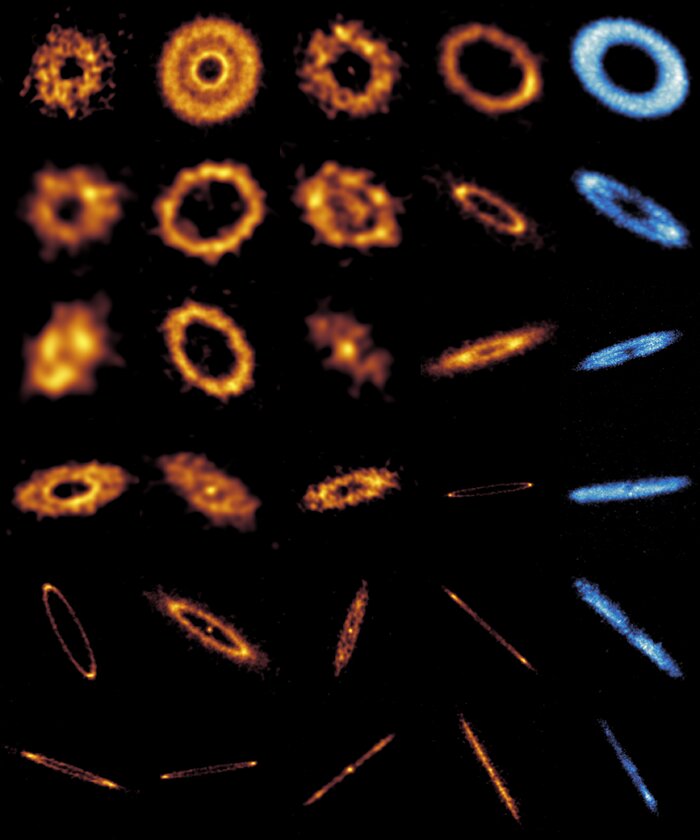
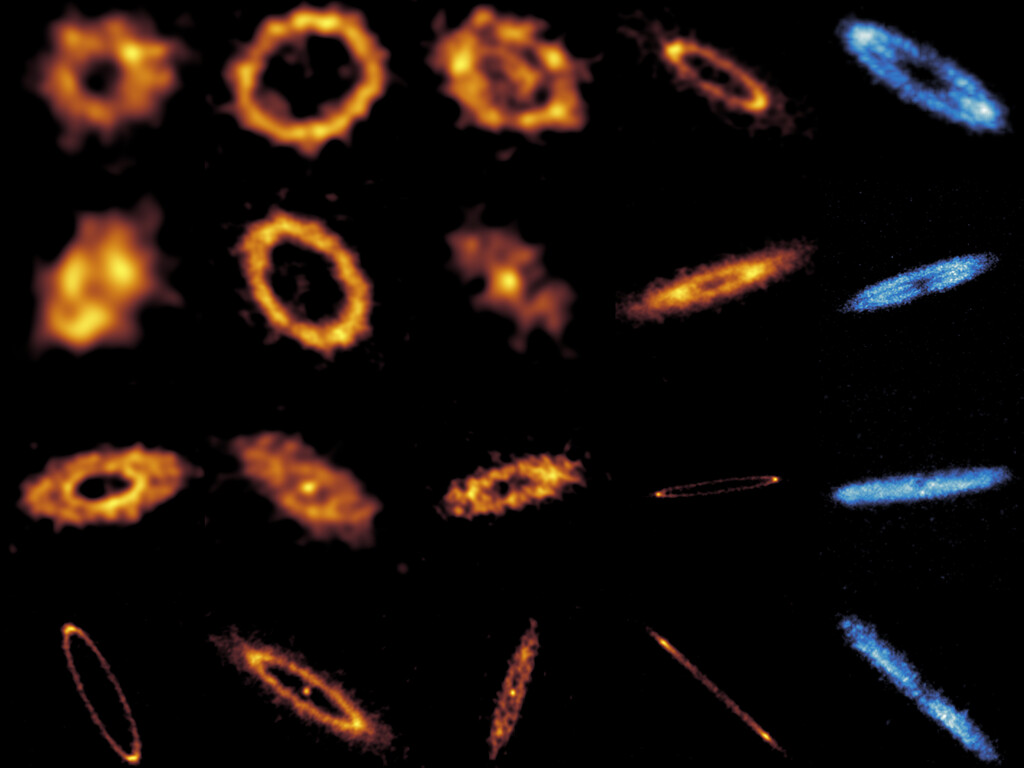
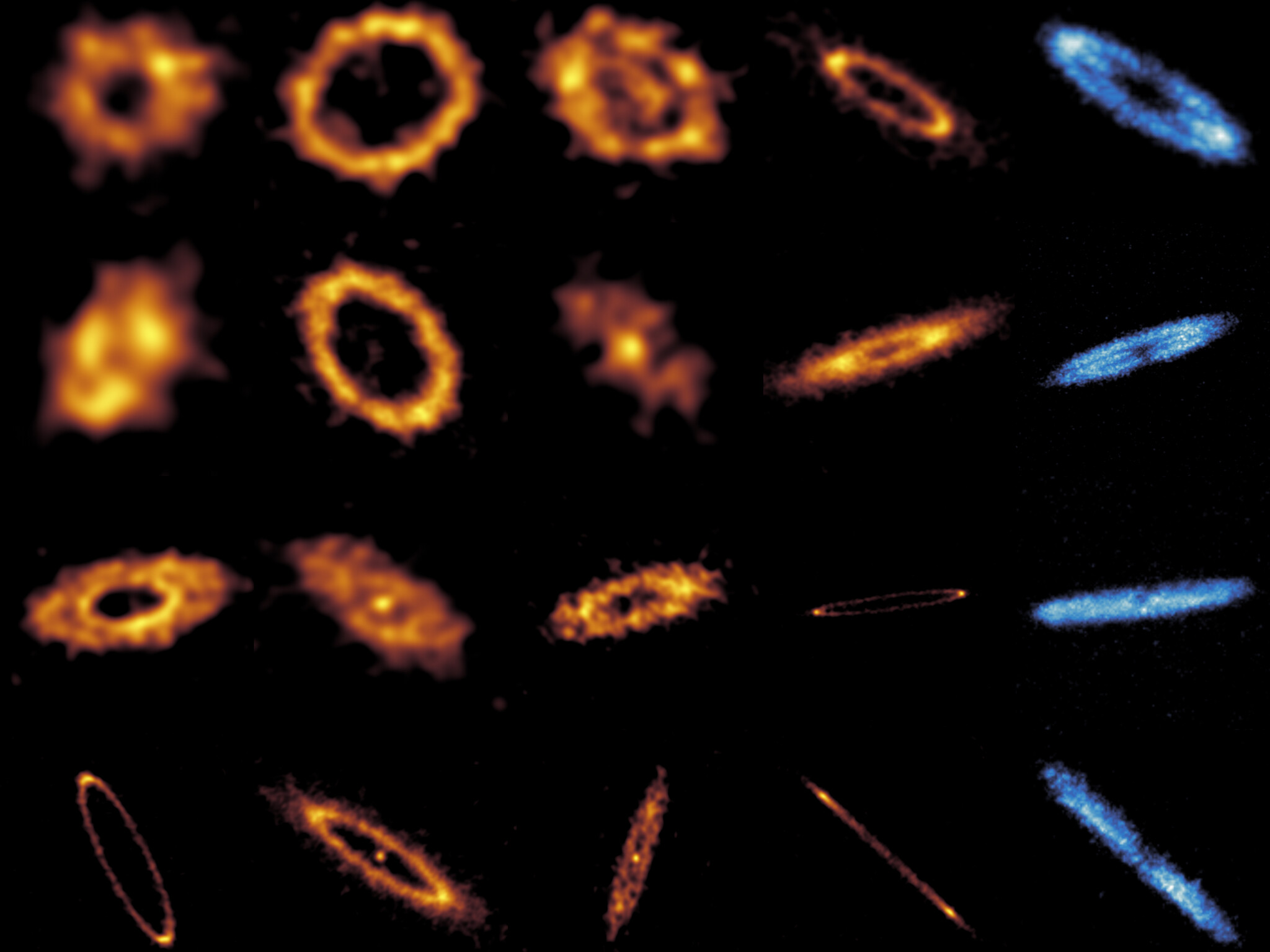
Nicht alle Ringe werden in Fantasiewelten geschmiedet, mein Schatz! Für Astronom*innen gilt: Man findet sie im Weltraum. Die Ringe im heutigen Bild der Woche sind Trümmerscheiben: Überreste der Planetenentstehung um andere Sterne.
Auch unser Sonnensystem hat eine solchen Trümmerscheibe, die Kuipergürtel genannt wird. Zahlreiche Asteroiden und Kometen kreisen darin jenseits der Neptunbahn um die Sonne. Man geht davon aus, dass der Einfluss großer Planeten wie Neptun verhindert hat, dass sich Staub und kieselsteingroße Körper in dieser Region zu größeren Objekten zusammengeballt haben. Daher können Trümmerscheiben als Überreste der Planetenentstehung angesehen werden, und die Untersuchung derjenigen um andere Sterne ist der Schlüssel zum Verständnis der Entstehung von Planetensystemen.
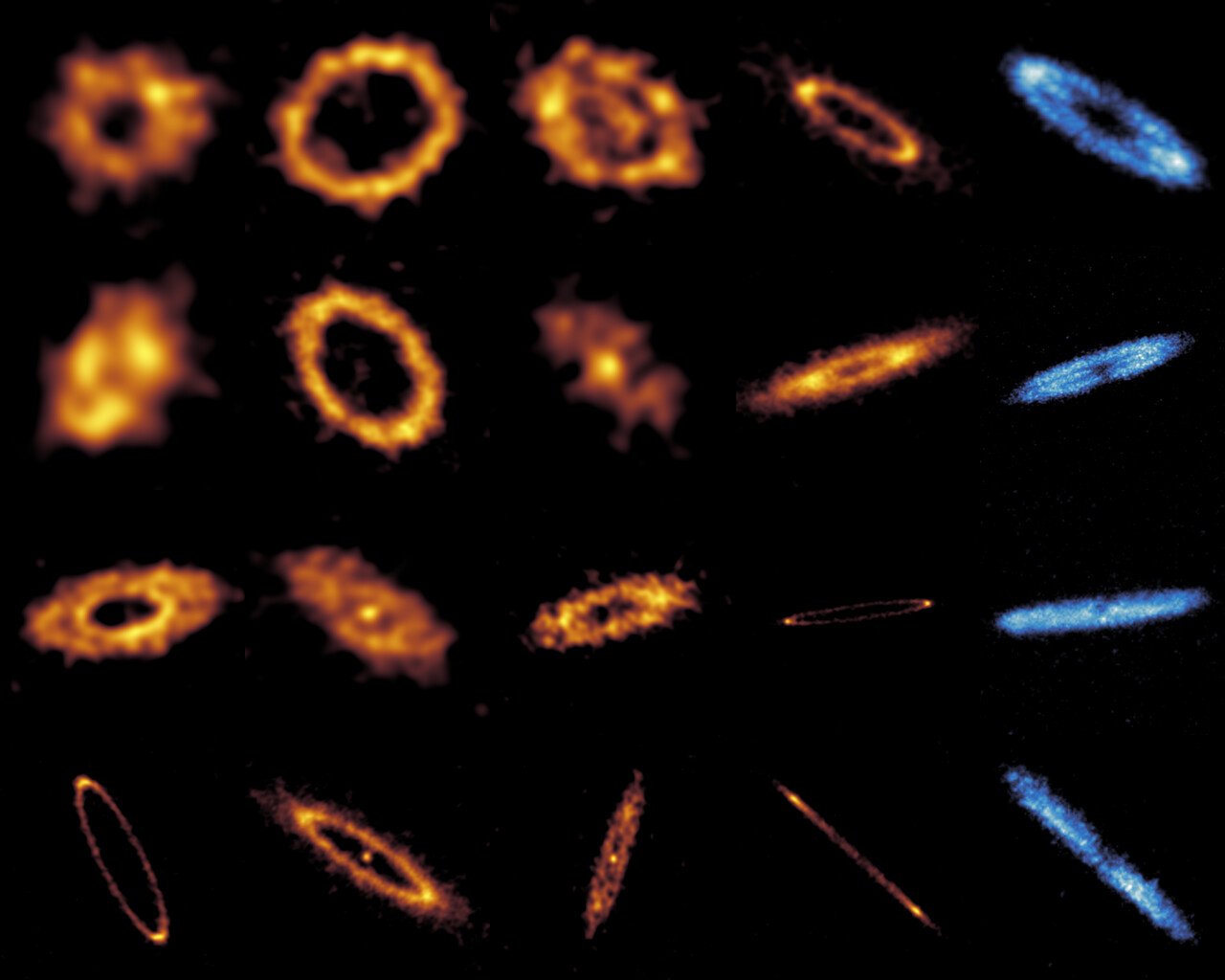
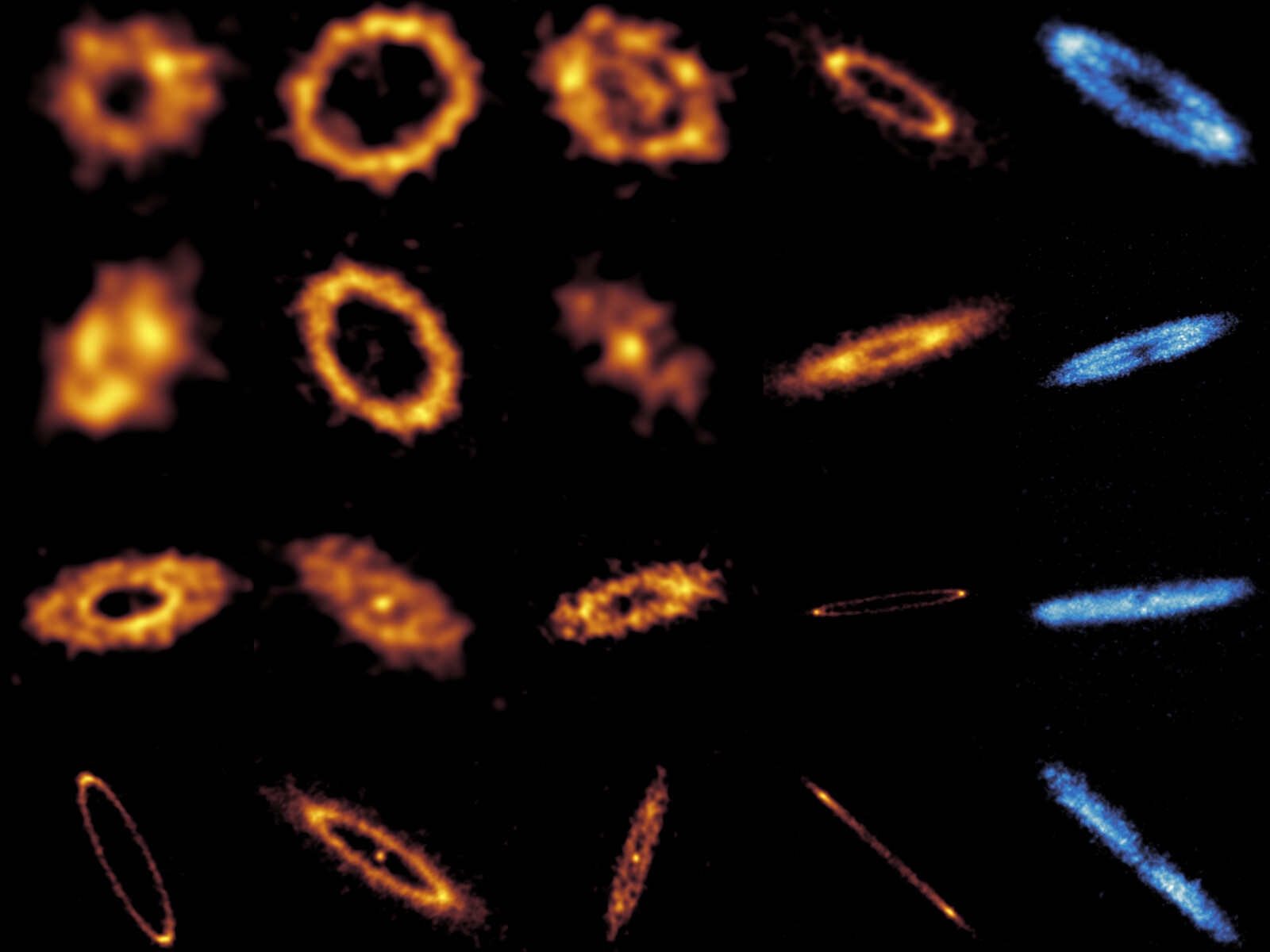
Ein Team von Astronomen hat mit dem Atacama Large Millimeter/submillimeter Array (ALMA) hochauflösende Bilder von 24 Trümmerscheiben um andere Sterne aufgenommen. Die orangefarbenen Bilder in diesem Bild der Woche zeigen die Verteilung des Staubs in diesen Ringen, die blauen Bilder die Verteilung des Gases in sechs davon.
Die Herkunft des Gases in Trümmerscheiben ist umstritten: Es könnte sich um übriggebliebene Urmaterie handeln, die von Anfang an um den Stern herum vorhanden war, oder um Gas, das später freigesetzt wurde, als Staubkörner miteinander kollidierten. Die Trümmerscheibe um den Stern HD 121617, der hier in den beiden Bildern oben rechts zu sehen ist, ist in dieser Hinsicht sehr interessant. Der Staubring (orange) ist auf einer Seite heller, was auf eine höhere Konzentration von Staubkörnern dort hindeutet. Das Team fand heraus, dass ein Gaswirbel dort Staubpartikel einfangen könnte, jedoch nur, wenn die Gasdichte sehr hoch ist. Eine derart hohe Gasdichte würde eher mit einem urtümlichen Ursprung dieses Gases vereinbar sein. Eine weitere Analyse der gesamten Stichprobe von Trümmerscheiben wird uns mehr über die Geheimnisse dieser wertvollen Ringe verraten.
Links
Herkunftsnachweis:ALMA(ESO/NAOJ/NRAO)/S. Marino et al.
Über das Bild
| ID: | potw2603a |
| Sprache: | de |
| Typ: | Beobachtung |
| Veröffentlichungsdatum: | 20. Januar 2026 09:00 |
| Größe: | 5000 x 6000 px |
Über das Objekt
| Name: | HD 121617 |
| Typ: | Milky Way : Star : Circumstellar Material : Disk : Debris |
Bildformate


Our use of Cookies
We use cookies that are essential for accessing our websites and using our services. We also use cookies to analyse, measure and improve our websites’ performance, to enable content sharing via social media and to display media content hosted on third-party platforms.
ESO Cookies Policy
The European Organisation for Astronomical Research in the Southern Hemisphere (ESO) is the pre-eminent intergovernmental science and technology organisation in astronomy. It carries out an ambitious programme focused on the design, construction and operation of powerful ground-based observing facilities for astronomy.
This Cookies Policy is intended to provide clarity by outlining the cookies used on the ESO public websites, their functions, the options you have for controlling them, and the ways you can contact us for additional details.
What are cookies?
Cookies are small pieces of data stored on your device by websites you visit. They serve various purposes, such as remembering login credentials and preferences and enhance your browsing experience.
Categories of cookies we use
Essential cookies (always active): These cookies are strictly necessary for the proper functioning of our website. Without these cookies, the website cannot operate correctly, and certain services, such as logging in or accessing secure areas, may not be available; because they are essential for the website’s operation, they cannot be disabled.
Functional Cookies: These cookies enhance your browsing experience by enabling additional features and personalization, such as remembering your preferences and settings. While not strictly necessary for the website to function, they improve usability and convenience; these cookies are only placed if you provide your consent.
Analytics cookies: These cookies collect information about how visitors interact with our website, such as which pages are visited most often and how users navigate the site. This data helps us improve website performance, optimize content, and enhance the user experience; these cookies are only placed if you provide your consent. We use the following analytics cookies.
Matomo Cookies:
This website uses Matomo (formerly Piwik), an open source software which enables the statistical analysis of website visits. Matomo uses cookies (text files) which are saved on your computer and which allow us to analyze how you use our website. The website user information generated by the cookies will only be saved on the servers of our IT Department. We use this information to analyze www.eso.org visits and to prepare reports on website activities. These data will not be disclosed to third parties.
On behalf of ESO, Matomo will use this information for the purpose of evaluating your use of the website, compiling reports on website activity and providing other services relating to website activity and internet usage.
Matomo cookies settings:
Additional Third-party cookies on ESO websites: some of our pages display content from external providers, e.g. YouTube.
Such third-party services are outside of ESO control and may, at any time, change their terms of service, use of cookies, etc.
YouTube: Some videos on the ESO website are embedded from ESO’s official YouTube channel. We have enabled YouTube’s privacy-enhanced mode, meaning that no cookies are set unless the user actively clicks on the video to play it. Additionally, in this mode, YouTube does not store any personally identifiable cookie data for embedded video playbacks. For more details, please refer to YouTube’s embedding videos information page.
Cookies can also be classified based on the following elements.
Regarding the domain, there are:
- First-party cookies, set by the website you are currently visiting. They are stored by the same domain that you are browsing and are used to enhance your experience on that site;
- Third-party cookies, set by a domain other than the one you are currently visiting.
As for their duration, cookies can be:
- Browser-session cookies, which are deleted when the user closes the browser;
- Stored cookies, which stay on the user's device for a predetermined period of time.
How to manage cookies
Cookie settings: You can modify your cookie choices for the ESO webpages at any time by clicking on the link Cookie settings at the bottom of any page.
In your browser: If you wish to delete cookies or instruct your browser to delete or block cookies by default, please visit the help pages of your browser:
Please be aware that if you delete or decline cookies, certain functionalities of our website may be not be available and your browsing experience may be affected.
You can set most browsers to prevent any cookies being placed on your device, but you may then have to manually adjust some preferences every time you visit a site/page. And some services and functionalities may not work properly at all (e.g. profile logging-in, shop check out).
Updates to the ESO Cookies Policy
The ESO Cookies Policy may be subject to future updates, which will be made available on this page.
Additional information
For any queries related to cookies, please contact: pdprATesoDOTorg.
As ESO public webpages are managed by our Department of Communication, your questions will be dealt with the support of the said Department.