Mladá, nebo stará? Obojí!
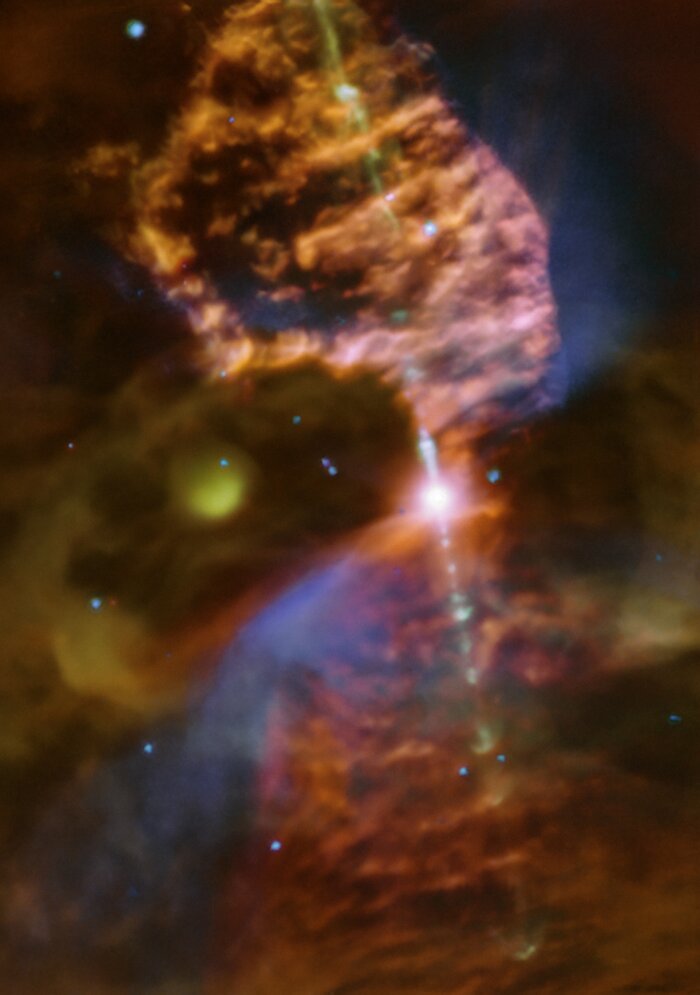
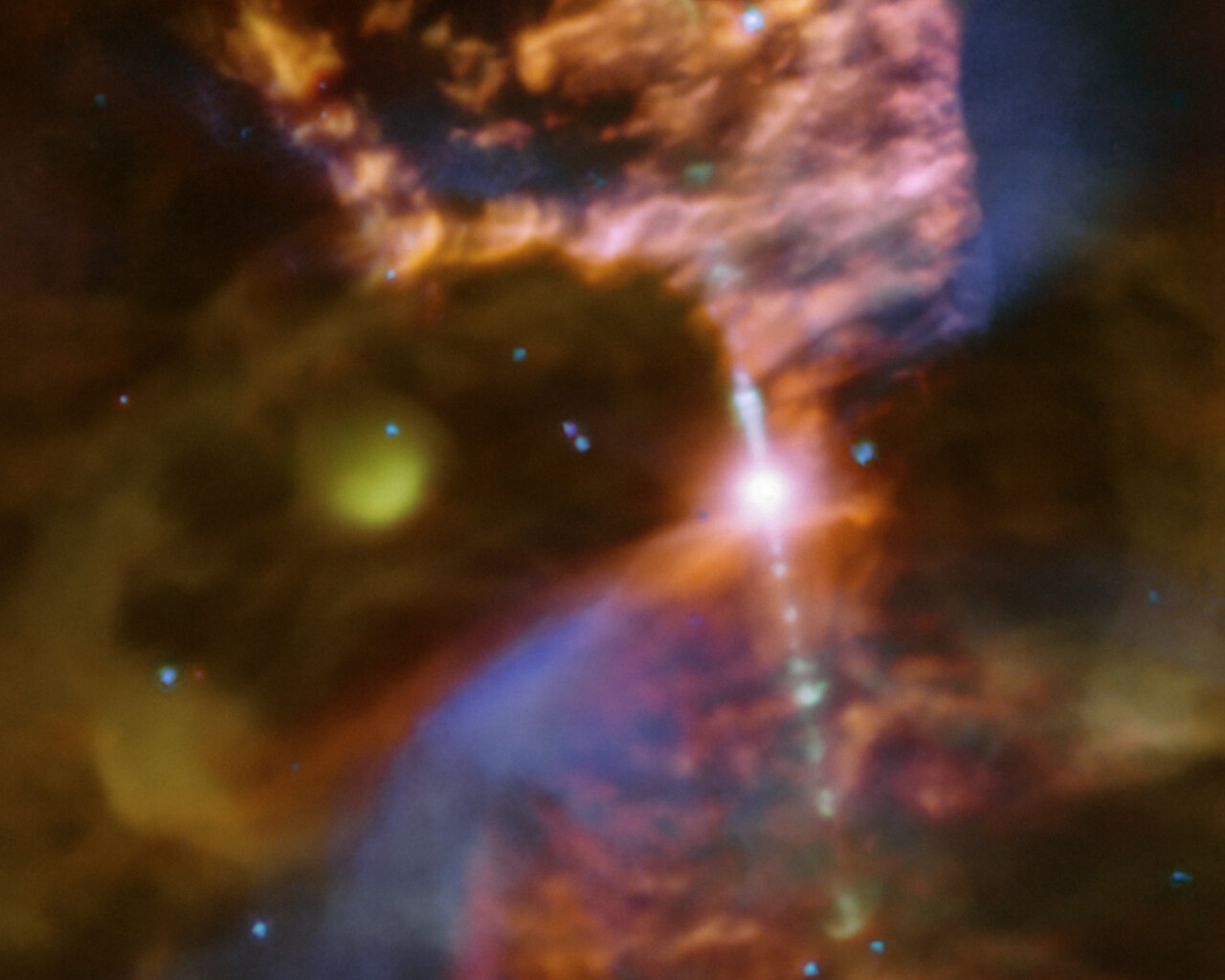
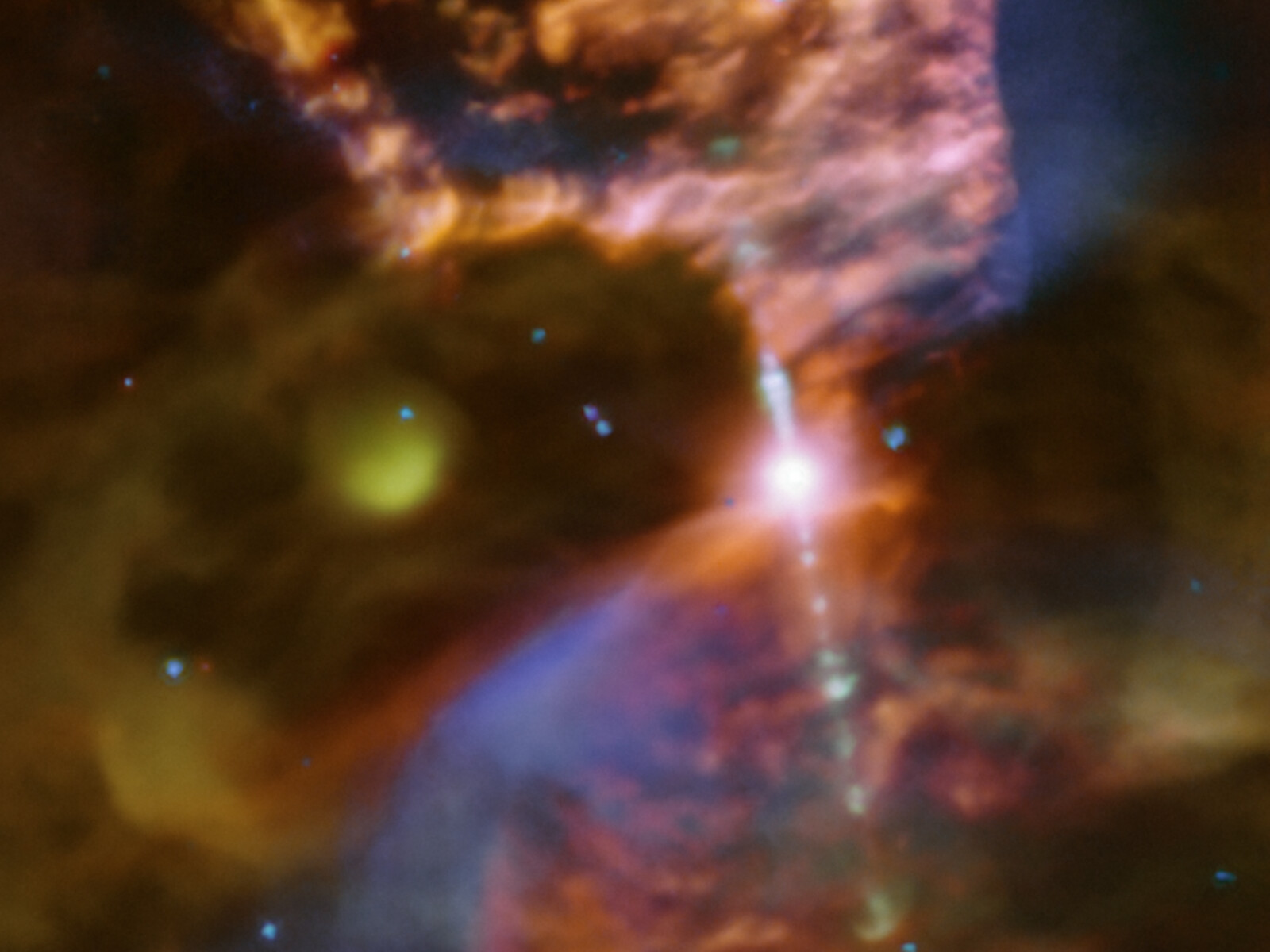
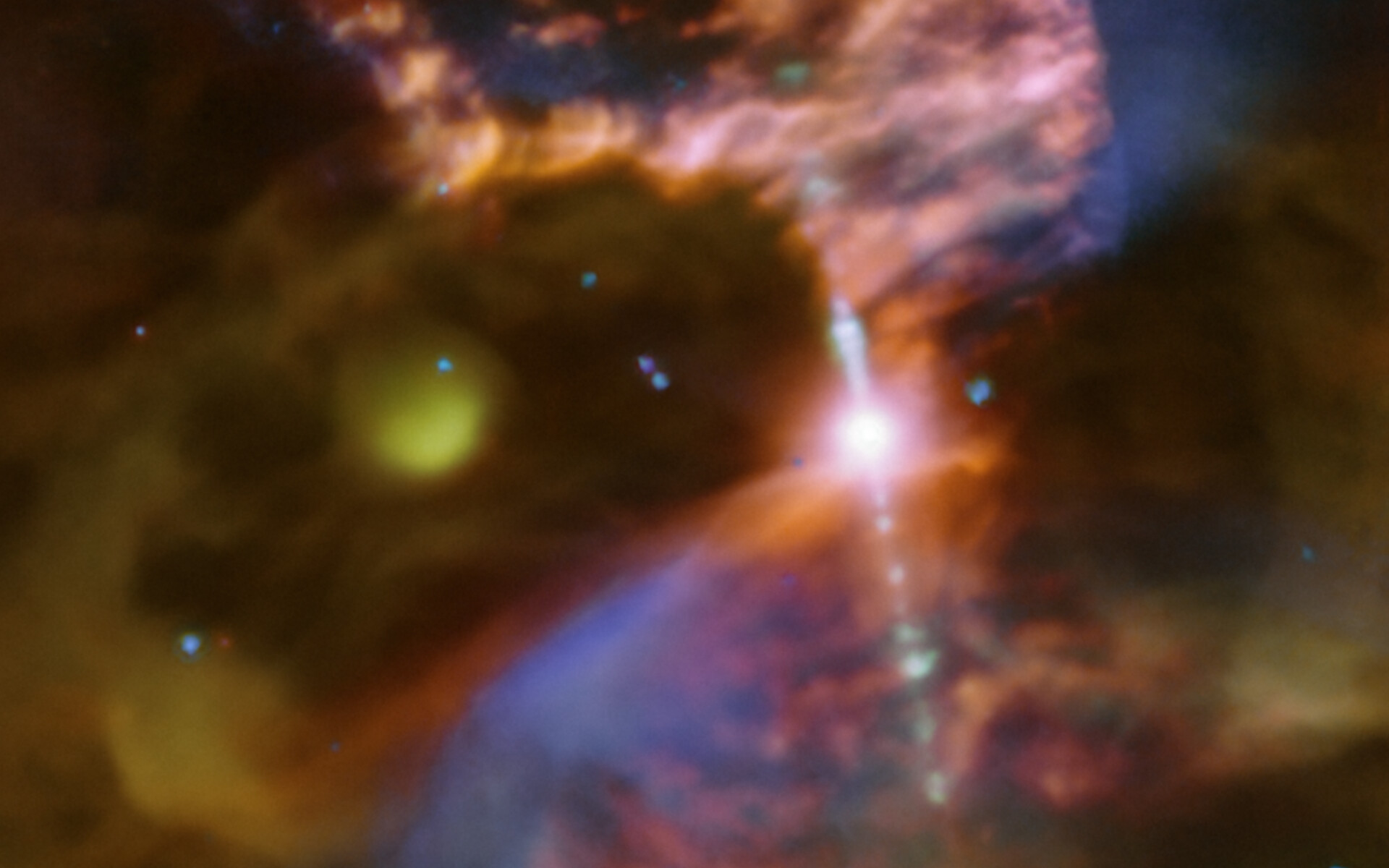
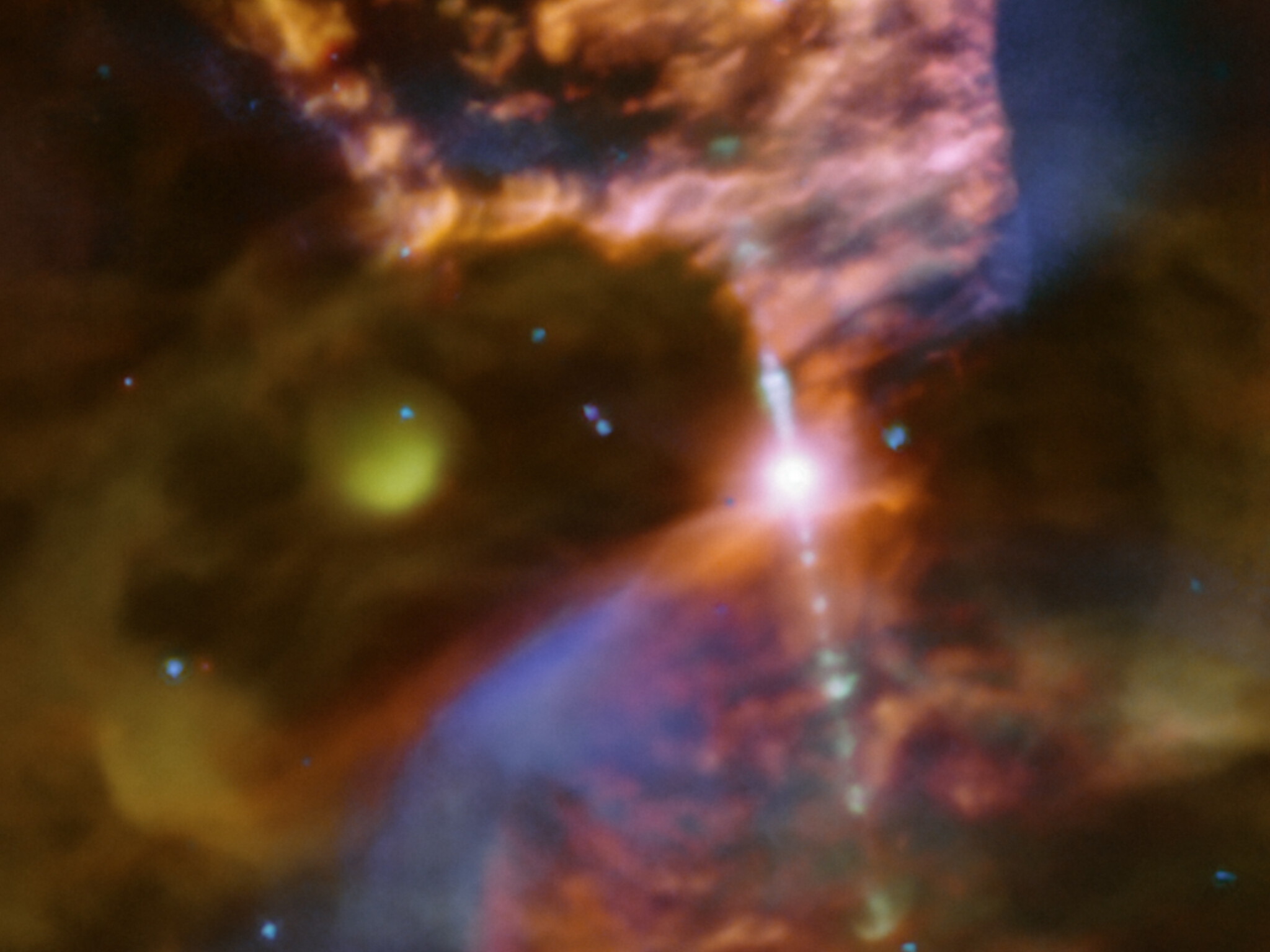
Dnešní Obrázek týdne představuje nečekaný zvrat. Vyobrazený objekt, známý jako Ve 7-27, byl po dlouhou dobu považován za planetární mlhovinu – konečnou fázi života hvězdy podobné našemu Slunci. Jenže dalekohled ESO Very Large Telescope (VLT) odhalil, že ve skutečnosti jde o stále se vyvíjející mladou hvězdu.
O povaze této mlhoviny se po dlouhá léta vedly debaty, ale až nyní přístroj MUSE na VLT zachytil její první detailní snímek. Ten ukázal, že Ve 7-27 vystřeluje energetické proudy materiálu (výtrysky) s hustými uzly neboli „střelami“, což je typické právě pro zrod hvězd. „Namísto toho, aby šlo o 'poslední vydechnutí' umírající hvězdy, je Ve 7-27 novorozenětem,“ říká Janette Suherli, doktorandka na univerzitě v Manitobě v Kanadě a hlavní autorka studie.
Přesto se však poblíž jedna skutečná „hvězdná mrtvola“ nachází. Kompaktní žlutozelená skvrna kousek vlevo od středu snímku ukazuje neutronovou hvězdu, která vznikla, když masivní hvězda explodovala jako supernova. Celá tato mlhovina je součástí obrovského mračna vyvrženého explozí – pozůstatku po supernově Vela Junior.
Pozorování přístroje MUSE ukázala, že mladá hvězda Ve 7-27 je vnořena přímo do materiálu ze supernovy. Vzdálenost Vela Junior nebyla nikdy přesně určena, ale nyní už víme, že se nachází v těsné blízkosti Ve 7-27. Jelikož je mladá hvězda vzdálená přibližně 4500 světelných let, musí být podobně daleko i Vela Junior. Přesné určení této vzdálenosti znamená, že konečně známe skutečnou velikost supernovy, rychlost jejího rozpínání a i to, kdy přesně explodovala. Tím se vyřešily desítky let trvající nesrovnalosti. Objev nám tak dává nahlédnout nejen do života energické mladé hvězdy, ale odhaluje i pravou povahu Vela Junior. Představuje tak „mimořádný moment, kdy se uzavírá kruh mezi hvězdným zrozením a smrtí, které zde existují bok po boku ve stejném prostředí,“ jak popisuje Suherli.
Odkazy
- Odborný článek
- Tisková zpráva univerzity v Manitobě
ESO/J. Suherli et al.
O snímku
| Id: | potw2604a |
| Jazyk: | cs |
| Typ: | Pozorování |
| Datum zveřejnění: | 26. ledna 2026 15:00 |
| Velikost: | 1416 x 2012 px |
O objektu
| Jméno: | Ve 7–27, Vela Junior |
| Typ: | Milky Way : Star : Evolutionary Stage : Young Stellar Object Milky Way : Star : Evolutionary Stage : Neutron Star Milky Way : Nebula : Type : Supernova Remnant Milky Way : Nebula : Type : Jet |


Barvy & filtry
| Pásmo | Vlnová délka | Dalekohled |
|---|---|---|
| Optický Nickel | 737 nm | Very Large Telescope MUSE |
| Optický Nitrogen | 658 nm | Very Large Telescope MUSE |
| Optický H-alpha | 656 nm | Very Large Telescope MUSE |
Our use of Cookies
We use cookies that are essential for accessing our websites and using our services. We also use cookies to analyse, measure and improve our websites’ performance, to enable content sharing via social media and to display media content hosted on third-party platforms.
ESO Cookies Policy
The European Organisation for Astronomical Research in the Southern Hemisphere (ESO) is the pre-eminent intergovernmental science and technology organisation in astronomy. It carries out an ambitious programme focused on the design, construction and operation of powerful ground-based observing facilities for astronomy.
This Cookies Policy is intended to provide clarity by outlining the cookies used on the ESO public websites, their functions, the options you have for controlling them, and the ways you can contact us for additional details.
What are cookies?
Cookies are small pieces of data stored on your device by websites you visit. They serve various purposes, such as remembering login credentials and preferences and enhance your browsing experience.
Categories of cookies we use
Essential cookies (always active): These cookies are strictly necessary for the proper functioning of our website. Without these cookies, the website cannot operate correctly, and certain services, such as logging in or accessing secure areas, may not be available; because they are essential for the website’s operation, they cannot be disabled.
Functional Cookies: These cookies enhance your browsing experience by enabling additional features and personalization, such as remembering your preferences and settings. While not strictly necessary for the website to function, they improve usability and convenience; these cookies are only placed if you provide your consent.
Analytics cookies: These cookies collect information about how visitors interact with our website, such as which pages are visited most often and how users navigate the site. This data helps us improve website performance, optimize content, and enhance the user experience; these cookies are only placed if you provide your consent. We use the following analytics cookies.
Matomo Cookies:
This website uses Matomo (formerly Piwik), an open source software which enables the statistical analysis of website visits. Matomo uses cookies (text files) which are saved on your computer and which allow us to analyze how you use our website. The website user information generated by the cookies will only be saved on the servers of our IT Department. We use this information to analyze www.eso.org visits and to prepare reports on website activities. These data will not be disclosed to third parties.
On behalf of ESO, Matomo will use this information for the purpose of evaluating your use of the website, compiling reports on website activity and providing other services relating to website activity and internet usage.
Matomo cookies settings:
Additional Third-party cookies on ESO websites: some of our pages display content from external providers, e.g. YouTube.
Such third-party services are outside of ESO control and may, at any time, change their terms of service, use of cookies, etc.
YouTube: Some videos on the ESO website are embedded from ESO’s official YouTube channel. We have enabled YouTube’s privacy-enhanced mode, meaning that no cookies are set unless the user actively clicks on the video to play it. Additionally, in this mode, YouTube does not store any personally identifiable cookie data for embedded video playbacks. For more details, please refer to YouTube’s embedding videos information page.
Cookies can also be classified based on the following elements.
Regarding the domain, there are:
- First-party cookies, set by the website you are currently visiting. They are stored by the same domain that you are browsing and are used to enhance your experience on that site;
- Third-party cookies, set by a domain other than the one you are currently visiting.
As for their duration, cookies can be:
- Browser-session cookies, which are deleted when the user closes the browser;
- Stored cookies, which stay on the user's device for a predetermined period of time.
How to manage cookies
Cookie settings: You can modify your cookie choices for the ESO webpages at any time by clicking on the link Cookie settings at the bottom of any page.
In your browser: If you wish to delete cookies or instruct your browser to delete or block cookies by default, please visit the help pages of your browser:
Please be aware that if you delete or decline cookies, certain functionalities of our website may be not be available and your browsing experience may be affected.
You can set most browsers to prevent any cookies being placed on your device, but you may then have to manually adjust some preferences every time you visit a site/page. And some services and functionalities may not work properly at all (e.g. profile logging-in, shop check out).
Updates to the ESO Cookies Policy
The ESO Cookies Policy may be subject to future updates, which will be made available on this page.
Additional information
For any queries related to cookies, please contact: pdprATesoDOTorg.
As ESO public webpages are managed by our Department of Communication, your questions will be dealt with the support of the said Department.