Tisková zpráva
Mrtvá hvězda a planetární tělesa: Astronomové zaznamenali vzácný cirkumstelární disk, který předpovídá budoucnost Sluneční soustavy
27. října 2026
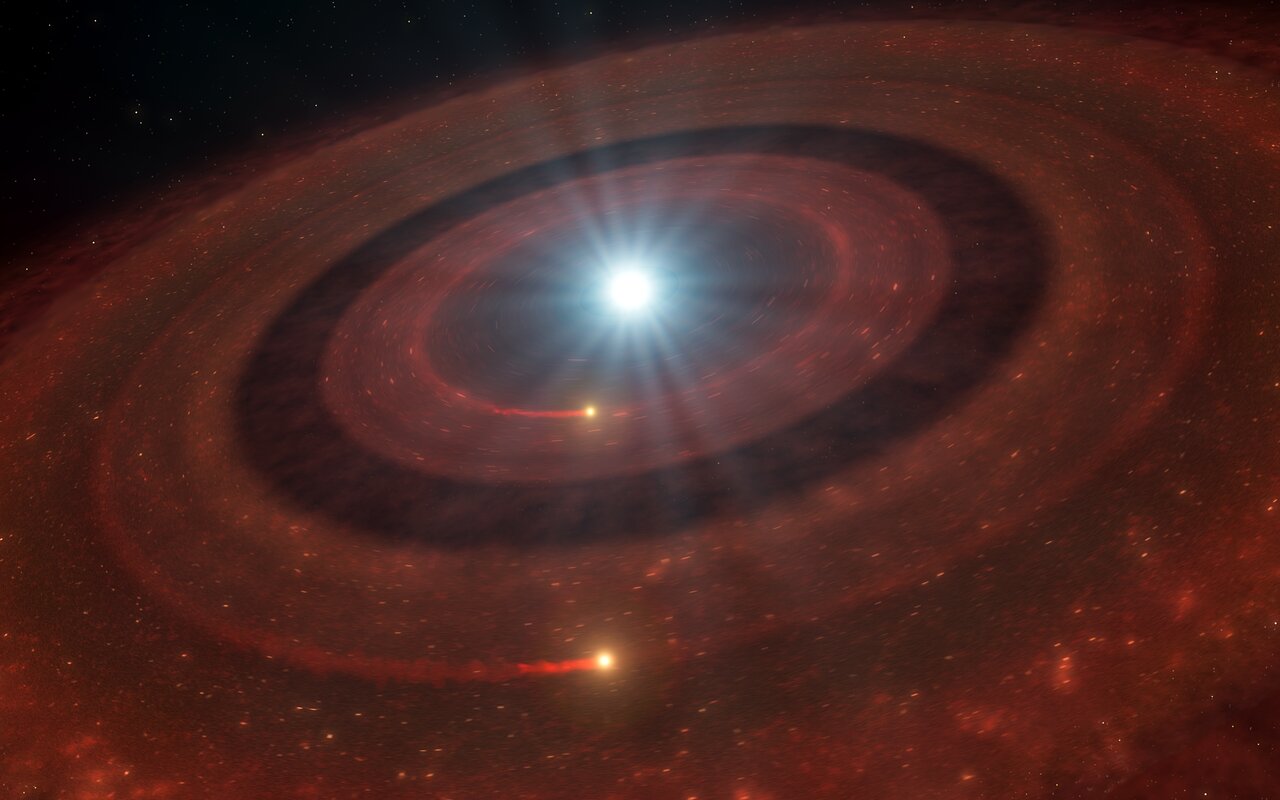
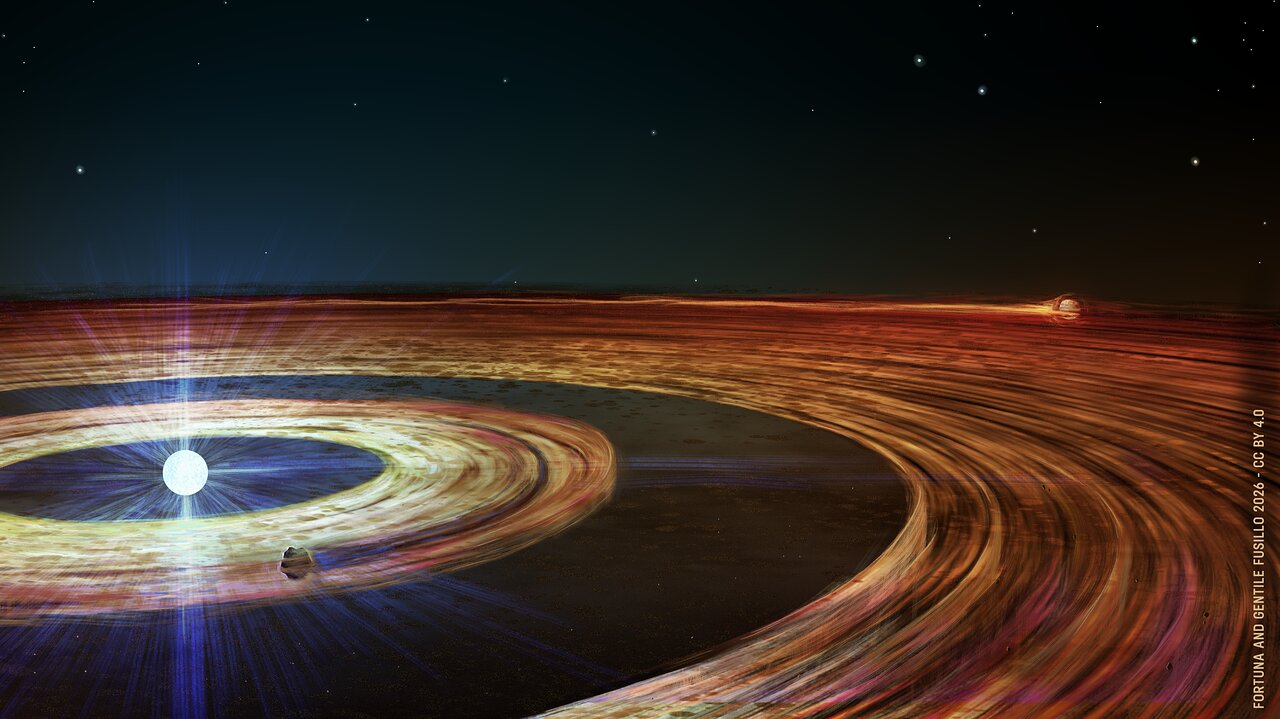
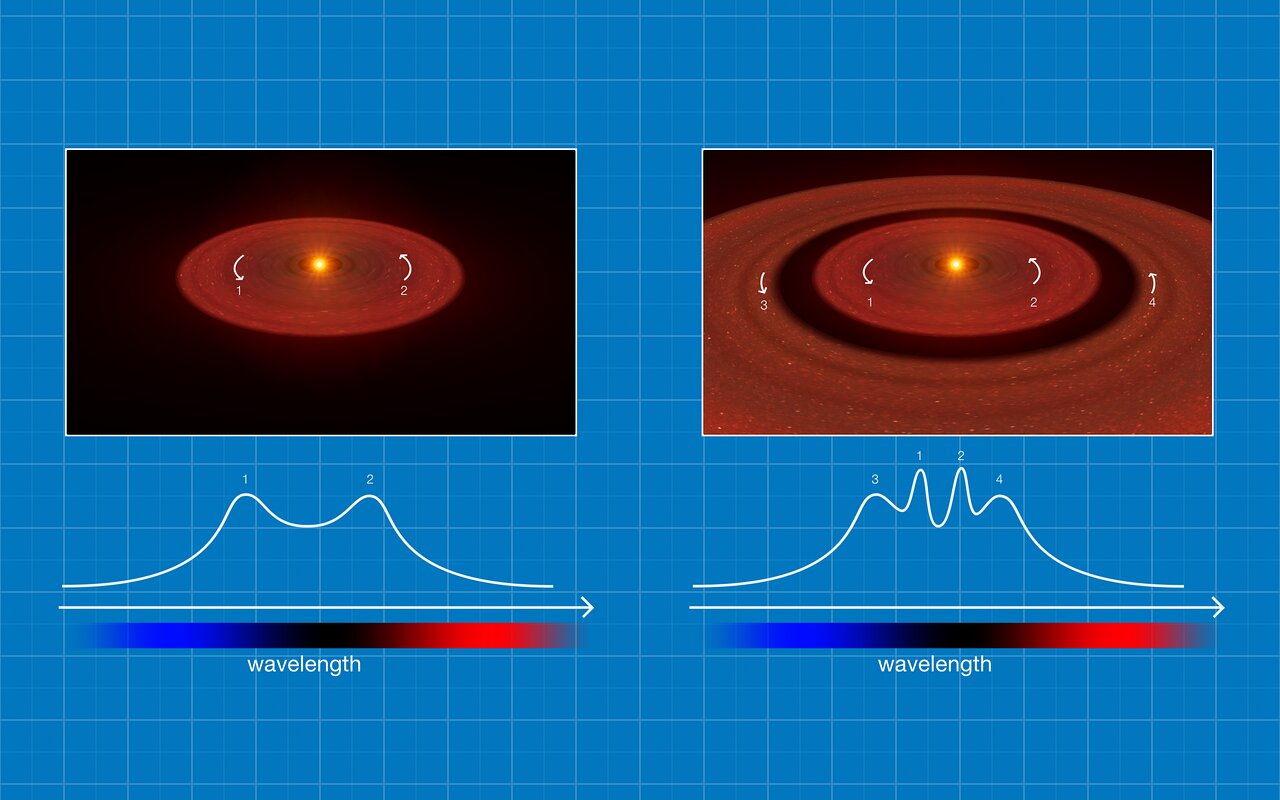
Astronomové pomocí dalekohledu ESO Very Large Telescope (VLT) objevili vzácný prachový disk kolem mrtvé hvězdy, který nabízí pohled na to, co by se mohlo jednou stát s naší Sluneční soustavou. Na rozdíl od podobných systémů, které byly objeveny dříve, se zde nachází trosky - pozůstatky planet, které kdysi obíhaly kolem hvězdy - uspořádány do dvou disků, jejichž části od sebe odděluje zřetelná mezera. Zdá se, že tento disk je utvářen dvěma planetárními tělesy, z nichž jedno může být velké jako Pluto a přežilo i ničivou smrt hvězdy.
„Již nějakou dobu víme, že planety mohou přežít transformaci své mateřské hvězdy, ale toto je první příklad složitého systému se dvěma prachovými disky a potenciálně dvěma přeživšími planetesimálami,“ říká Nicola Gentile Fusillo, astronom z Univerzity v Terstu v Itálii a hlavní autor studie, která byla tento týden zveřejněna v časopise Nature Astronomy. Ústřední hvězdou tohoto systému je bílý trpaslík J1328−1450 - husté, vyhaslé jádro, které zůstalo poté, co hvězdě podobné našemu Slunci došlo palivo.
Když hvězdy podobné Slunci vstupují do závěrečných fází svého života, zvětšují objem a odvrhují vnější vrstvy, přičemž pohlcují a ničí blízké planety. Přeživší kamenná tělesa se mohou rozpadnout a vytvořit disk kolem centrální mrtvé hvězdy. Disk kolem J1328−1450 se však liší od disků pozorovaných u jiných mrtvých hvězd: místo jednoho prstence planetárních zbytků obklopují hvězdu dva soustředné prstence trosek.
„Struktura, kterou v tomto systému pozorujeme, je obzvláště zajímavá, protože oba plynné prstence jsou pozoruhodně stabilní a jsou od sebe odděleny mezerou,“ říká spoluautor studie Felipe Lagos-Vilches, astronom z Univerzity ve Warwicku ve Spojeném království a Technické univerzity Federica Santa Maríi v Chile. „Tento systém nám poskytuje vzácný pohled na chaotický proces, při němž planetární soustava spěje ke svému konci. Naznačuje, že disky kolem mrtvých hvězd mohou mít mnohem složitější strukturu, než jsme si dosud uvědomovali,“ dodává Gentile Fusillo, který působí také na Astronomické observatoři v Terstu spadající pod italský Národní institut astrofyziky (INAF).
Podle výzkumné skupiny tuto složitou strukturu tvořenou dvěma prstenci pravděpodobně udržují dvě přeživší tělesa podobná planetám, z nichž každé obíhá po vlastní dráze. Vědci odhadují, že těleso ve vnitřním prstenci má velikost typického asteroidu, tedy průměr několika kilometrů, zatímco vnější těleso by mohlo být velké jako Pluto, nebo dokonce jako náš Měsíc.
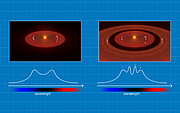
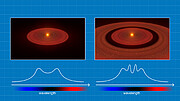
Všechny dosud známé disky kolem bílých trpaslíků vykazovaly stejné znaky svědčící o přítomnosti jednoho plochého rotujícího disku. Nová pozorování přístrojem X-Shooter na dalekohledu ESO VLT v chilské poušti Atacama však ukazují, že systém J1328−1450 se od tohoto vzorce zcela odchyluje. Odhalují totiž charakteristické znaky disku dvojitého.
Pozorování rovněž odhalila přítomnost prvků, jako jsou vápník, kyslík, hořčík a železo, což ukazuje na složení podobné materiálu kamenných planet, který se nachází i v naší Sluneční soustavě. Získaná data navíc naznačují, že prstence mají odlišné složení: vnitřní prstenec je bohatý na plynný hořčík, zatímco ve vnějším prstenci ho téměř nenajdeme. To naznačuje, že planetesimály, jejichž rozpadem materiál prstenců vzniká, pocházejí ze dvou planet s odlišným složením. Alternativním vysvětlením je, že jde o pozůstatky různých částí jednoho nebeského tělesa, například planetární kůry a jádra.
Podobný osud může čekat i naši Sluneční soustavu, protože naše Slunce se v daleké budoucnosti promění v bílého trpaslíka - proces, který může vést ke zničení Země. „Tento systém nám proto nabízí jedinečný pohled na to, jak by mohla vypadat budoucnost planetárních soustav, včetně té naší,“ uzavírá Lagos-Vilches.
Další informace
Tento výzkum byl prezentován ve vědecké studii publikované v časopise Nature Astronomy (doi: 10.1038/s41550-026-03004-3).
Výzkumný tým tvoří Nicola Pietro Gentile Fusillo (katedra fyziky Univerzity v Terstu a Astronomická observatoř vTerstu spadající pod Národní institut astrofyziky – INAF, Itálie), Felipe Lagos-Vilches (katedra fyziky Univerzity veWarwicku, Spojené království, a katedra fyziky Technické univerzity Federica Santa Maríi, Chile), Boris T. Gänsicke(katedra fyziky a Centrum pro výzkum exoplanet a obyvatelnosti na Univerzitě ve Warwicku, Spojené království),Christopher J. Manser (katedra fyziky, skupina astrofyziky, Imperial College London, Spojené království) a DetlevKoester (Ústav teoretické fyziky a astrofyziky Univerzity v Kielu, Německo).
Evropská jižní observatoř (ESO) umožňuje vědcům z celého světa odhalovat tajemství vesmíru ve prospěch celéholidstva. Navrhujeme, stavíme a provozujeme špičkové pozemní observatoře, které astronomové využívají k hledáníodpovědí na fascinující otázky a k šíření zájmu o astronomii. Zároveň podporujeme mezinárodní spolupráci v oblastiastronomického výzkumu. ESO byla založena v roce 1962 jako mezivládní organizace. V současnosti ji podporuje 16 členských států: Rakousko,Belgie, Česko, Dánsko, Francie, Finsko, Německo, Irsko, Itálie, Nizozemsko, Polsko, Portugalsko, Španělsko, Švédsko,Švýcarsko a Spojené království. Kromě nich spolupracuje s hostitelským státem Chile a Austrálií, která má statusstrategického partnera. Sídlo ESO, návštěvnické centrum a planetárium ESO Supernova se nacházejí nedaleko německého Mnichova. Jejídalekohledy jsou umístěny v chilské poušti Atacama, která nabízí mimořádné a jedinečné podmínky pro pozorováníoblohy. ESO provozuje tři pozorovací střediska: La Silla, Paranal a Chajnantor. Na Paranalu provozuje dalekohled Very LargeTelescope (VLT) a jeho interferometr Very Large Telescope Interferometer (VLTI), stejně jako přehlídkové dalekohledy,například VISTA. Na Paranalu bude ESO rovněž hostit a provozovat jižní soustavu observatoře Cherenkov Telescope Array, která budenejvětší a nejcitlivější observatoří gama záření na světě. Společně s mezinárodními partnery provozuje ESO na Chajnantoru observatoř ALMA, která pozoruje vesmír vmilimetrovém a submilimetrovém oboru elektromagnetického spektra. Na hoře Cerro Armazones nedaleko Paranalu budujeme „největší oko na obloze“ – mimořádně velký dalekohled ESO(Extremely Large Telescope, ELT). Z našich kanceláří v chilském Santiagu podporujeme provoz našich zařízení v zemi a rozvíjíme spolupráci s chilskýmipartnery i širokou veřejností.
Kontakty
Nicola Pietro Gentile Fusillo
University of Trieste and INAF-Astronomical Observatory of Trieste
Trieste, Italy
Tel.: +39 403199156
Email: nicola.gentilefusillo@gmail.com, nicolapietro.gentilefusillo@units.it
Felipe Esteban Lagos Vilches
Universidad Técnica Federico Santamaria
Valparaiso, Chile
Email: felipe.lagos.vilches@gmail.com
Bárbara Ferreira
ESO Media Manager
Garching bei München, Germany
Tel.: +49 89 3200 6670
Mobil: +49 151 241 664 00
Email: press@eso.org
Anežka Srbljanović (press contact Česko)
ESO Science Outreach Network
a Astronomical Institute of Czech Academy of Sciences
Tel.: +420 323 620 116
Email: eson-czech@eso.org
O zprávě
| Tiskové zpráva č.: | eso2613cs |
| Jméno: | J1328−1450 |
| Typ: | Milky Way : Star : Circumstellar Material : Planetary System |
| Facility: | Very Large Telescope |
| Instruments: | X-shooter |
Obrázky
pouze anglicky

pouze anglicky
Videa

Our use of Cookies
We use cookies that are essential for accessing our websites and using our services. We also use cookies to analyse, measure and improve our websites’ performance, to enable content sharing via social media and to display media content hosted on third-party platforms.
ESO Cookies Policy
The European Organisation for Astronomical Research in the Southern Hemisphere (ESO) is the pre-eminent intergovernmental science and technology organisation in astronomy. It carries out an ambitious programme focused on the design, construction and operation of powerful ground-based observing facilities for astronomy.
This Cookies Policy is intended to provide clarity by outlining the cookies used on the ESO public websites, their functions, the options you have for controlling them, and the ways you can contact us for additional details.
What are cookies?
Cookies are small pieces of data stored on your device by websites you visit. They serve various purposes, such as remembering login credentials and preferences and enhance your browsing experience.
Categories of cookies we use
Essential cookies (always active): These cookies are strictly necessary for the proper functioning of our website. Without these cookies, the website cannot operate correctly, and certain services, such as logging in or accessing secure areas, may not be available; because they are essential for the website’s operation, they cannot be disabled.
Functional Cookies: These cookies enhance your browsing experience by enabling additional features and personalization, such as remembering your preferences and settings. While not strictly necessary for the website to function, they improve usability and convenience; these cookies are only placed if you provide your consent.
Analytics cookies: These cookies collect information about how visitors interact with our website, such as which pages are visited most often and how users navigate the site. This data helps us improve website performance, optimize content, and enhance the user experience; these cookies are only placed if you provide your consent. We use the following analytics cookies.
Matomo Cookies:
This website uses Matomo (formerly Piwik), an open source software which enables the statistical analysis of website visits. Matomo uses cookies (text files) which are saved on your computer and which allow us to analyze how you use our website. The website user information generated by the cookies will only be saved on the servers of our IT Department. We use this information to analyze www.eso.org visits and to prepare reports on website activities. These data will not be disclosed to third parties.
On behalf of ESO, Matomo will use this information for the purpose of evaluating your use of the website, compiling reports on website activity and providing other services relating to website activity and internet usage.
Matomo cookies settings:
Additional Third-party cookies on ESO websites: some of our pages display content from external providers, e.g. YouTube.
Such third-party services are outside of ESO control and may, at any time, change their terms of service, use of cookies, etc.
YouTube: Some videos on the ESO website are embedded from ESO’s official YouTube channel. We have enabled YouTube’s privacy-enhanced mode, meaning that no cookies are set unless the user actively clicks on the video to play it. Additionally, in this mode, YouTube does not store any personally identifiable cookie data for embedded video playbacks. For more details, please refer to YouTube’s embedding videos information page.
Cookies can also be classified based on the following elements.
Regarding the domain, there are:
- First-party cookies, set by the website you are currently visiting. They are stored by the same domain that you are browsing and are used to enhance your experience on that site;
- Third-party cookies, set by a domain other than the one you are currently visiting.
As for their duration, cookies can be:
- Browser-session cookies, which are deleted when the user closes the browser;
- Stored cookies, which stay on the user's device for a predetermined period of time.
How to manage cookies
Cookie settings: You can modify your cookie choices for the ESO webpages at any time by clicking on the link Cookie settings at the bottom of any page.
In your browser: If you wish to delete cookies or instruct your browser to delete or block cookies by default, please visit the help pages of your browser:
Please be aware that if you delete or decline cookies, certain functionalities of our website may be not be available and your browsing experience may be affected.
You can set most browsers to prevent any cookies being placed on your device, but you may then have to manually adjust some preferences every time you visit a site/page. And some services and functionalities may not work properly at all (e.g. profile logging-in, shop check out).
Updates to the ESO Cookies Policy
The ESO Cookies Policy may be subject to future updates, which will be made available on this page.
Additional information
For any queries related to cookies, please contact: pdprATesoDOTorg.
As ESO public webpages are managed by our Department of Communication, your questions will be dealt with the support of the said Department.